

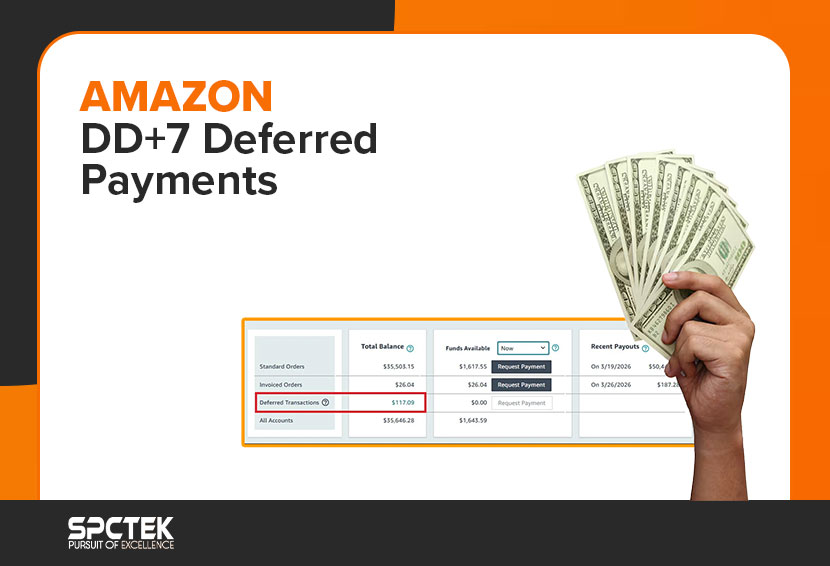
Amazon’s evolving payout system has become a major topic of discussion among sellers in 2026. With the introduction and expansion of the Delivery Date + 7 (DD+7) policy, many sellers are noticing delays in accessing their funds, increased “deferred transactions,” and changes in cash flow patterns.
If you’ve recently checked your Seller Central account and wondered why your balance isn’t available for disbursement, you’re not alone. This guide breaks down everything you need to know, from how Amazon payouts work to how the DD+7 policy affects your business.
What Are Amazon Seller Payouts?
Amazon seller payouts refer to the funds disbursed to sellers after sales are completed, fees are deducted, and any reserves are applied. These payouts are transferred directly to your registered bank account.
The process isn’t instant. Amazon holds funds temporarily to ensure order fulfillment, delivery confirmation, and customer satisfaction.
Available Balance vs Disbursement vs Deferred Transactions
Understanding these three terms is key to tracking your Amazon payments.
- Available Balance: Your available balance is the money currently ready to be paid out to you. It includes your sales after deducting Amazon fees and any reserves. This amount is still inside Amazon but is eligible for transfer to your bank.
- Disbursement: A disbursement is when Amazon actually sends your money to your bank account. This usually happens automatically every two weeks, but you can request it manually if eligible. After the disbursement is initiated, it may still take a few days for the funds to appear in your bank.
- Deferred Transactions: Deferred transactions are funds that are not yet available for payout. These are typically held until the order is delivered, and the required holding period (like DD+7) is completed.
Key Components of Amazon Payments
Amazon calculates your payout based on several factors. These include order revenue, Amazon fees such as referral and fulfillment fees, refunds and returns, and any reserves or deferred amounts.
Understanding these components is essential because the DD+7 policy directly affects when revenue moves from pending to available.
Amazon Payout Schedule Explained: When and How Amazon Typically Pays Sellers
Amazon follows a structured payout policy that determines when sellers receive their money. For Professional Sellers, Amazon payouts are typically issued every two weeks, but only for orders that have been delivered for at least 7 days. But even after the payout is initiated after the 7-day delay, it can take an additional 5-6 days to reach your bank account.
The 7-day buffer time after the delivery allows customers time to inspect their orders and request refunds if needed. Because of this, sellers don’t receive payments immediately after a sale, which can feel slower compared to traditional retail businesses.
In some cases, payments may be delayed beyond the standard 14-day cycle. For example, if an order is delivered close to the payout date, it may not be included in that cycle and instead gets pushed to the next one. This means part of your balance carries over and appears in Deferred transactions, delaying your full Amazon Payouts.
Amazon Vendor Payment Terms
While sellers are paid on a biweekly cycle, Amazon vendors operate under different terms. Vendors are typically paid on Net 30, Net 60, or Net 90 terms.
This means vendors receive payments 30, 60, or 90 days after invoicing. These longer timelines can create cash flow challenges, especially for businesses that rely on faster turnover.
How Amazon Transfers Payments to Your Bank
Based on Amazon’s payout policy, Amazon sends payments through ACH transfers, which are not same-day transfers. After Amazon initiates the payment, it can take about 5–6 business days for the funds to reach your bank account.
When you combine this with the 14-day payout cycle, sellers may wait around 20–21 days from the time of sale to actually receive their Amazon payouts.
When the payment arrives in your bank account, it may appear under different names depending on how the customer paid:
- Amazon Payments, Inc.: This appears when customers pay before receiving the product, such as via card or online payment.
- Amazon Services LLC: This shows up when payment is completed after delivery, such as cash on delivery.
What Is the Amazon DD+7 Policy?
DD+7 stands for Delivery Date plus 7 days. Under this policy, expanded in March 2026, Amazon holds your funds until seven days after the order is marked as delivered. This means that even after a customer receives the product, your funds remain unavailable for an additional week and appear in deferred transactions.
Why Did Amazon Introduce DD+7?
Amazon introduced this policy to reduce risk. It allows time for customers to report issues, request refunds, or initiate returns before funds are released to sellers.
From Amazon’s perspective, this improves buyer trust and marketplace integrity. From a seller’s perspective, it delays cash flow.
Example Timeline
Imagine you sell a product on April 1. It ships on April 2 and is delivered on April 5. Under DD+7, your funds will only become available around April 12. This delay becomes even more significant for products with longer shipping times.
Deferred Transactions on Amazon: Meaning and Impact
One of the most noticeable effects of DD+7 is the increase in deferred transactions.
What Are Deferred Transactions?
Deferred transactions on Amazon are transactions that are temporarily withheld and not yet eligible for payout. These funds are visible in your Seller Central account but cannot be disbursed, as they are paid out at a future date. They represent revenue that is “in progress” rather than fully cleared.
Why Amazon Holds Funds: Key Reasons Behind Deferred Payments
While DD+7 is the primary factor, there are other reasons Amazon may hold your funds.
Delivery Confirmation Delays: If there is a delay in confirming delivery, your DD+7 countdown does not begin. This can extend the holding period further.
Returns and Refund Risks: Amazon accounts for the possibility of returns and refunds. Holding funds ensures that customer claims can be processed without financial risk to the platform.
Policy Enforcement and Account Risk: If your account shows signs of risk, such as late shipments or customer complaints, Amazon may increase reserves or delay payouts.
How to View My Amazon Deferred Payments?
You can find deferred transactions in your payments dashboard in Amazon Seller Central:
- Log in to your Amazon Seller Central account and navigate to the Payments section from the main menu.
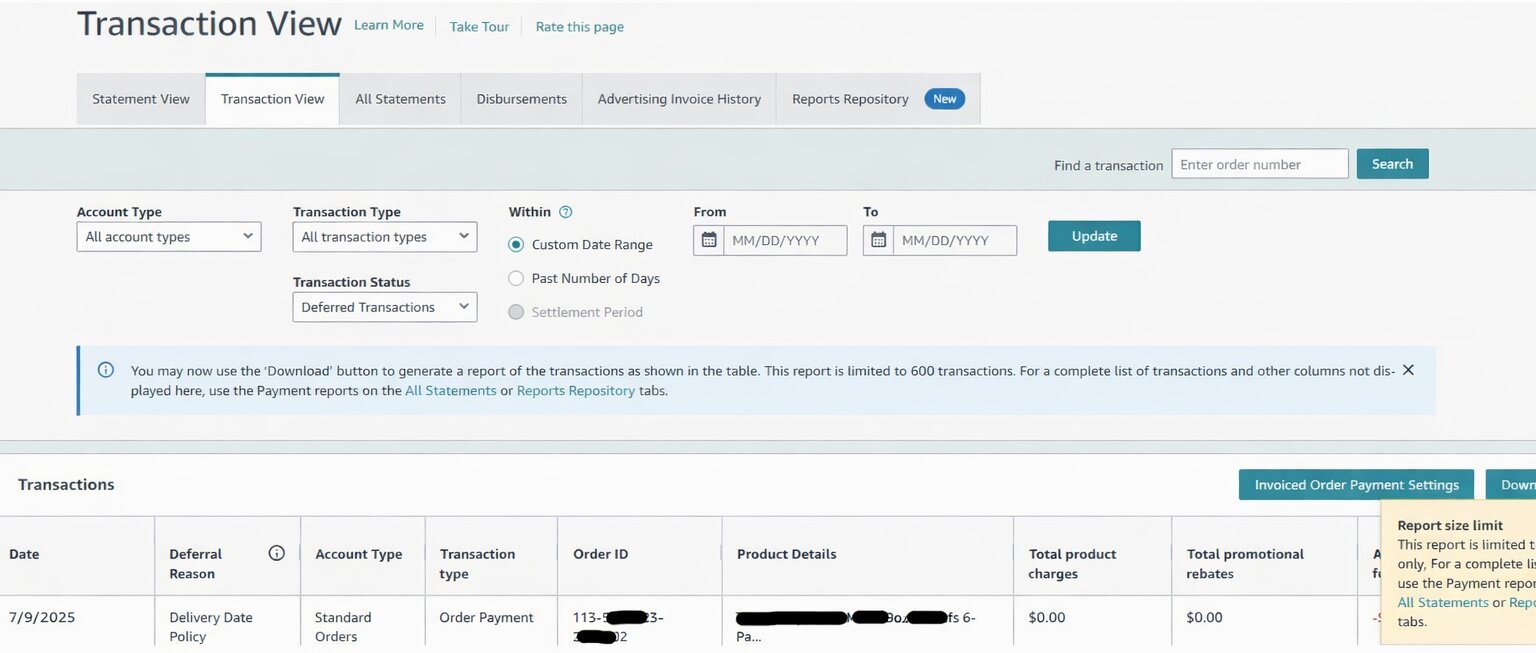
- Inside Payments, click on Transaction View. This page shows all your transaction activity, including completed, pending, and deferred payments.
- Locate the Transaction Status dropdown menu. Select Deferred Transactions from the list and click Update. You will see all transactions that are currently being held.
- For each deferred transaction, you can view the reason for deferral (e.g., delivery pending, reserve policy) and the expected payment release date.
Alternative Method: Using the Deferred Transaction Report
- In Seller Central, navigate to Reports and click Reports Repository.
- From the Report Type dropdown, choose Deferred Transaction.
- Select the relevant account type: Standard Orders or Invoiced Orders.
- Click Request Report and wait for it to generate. Once ready, download the report to view a detailed list of all deferred transactions.
Deferred vs Available Funds
The key difference lies in accessibility. Available funds can be disbursed, while deferred funds cannot.
Under DD+7, a larger percentage of your total sales will remain deferred at any given time, especially if you have high order volume.
How DD+7 Affects Your Amazon Payouts and Cash Flow
The shift to DD+7 has significant implications for sellers’ financial planning.
Delayed Cash Flow
The most immediate impact is slower access to funds. Sellers who previously relied on faster payout cycles now face delays of several days or even weeks. This can create challenges in covering operational costs such as inventory, advertising, and logistics.
Inventory Planning Challenges
Cash flow delays directly affect your ability to restock inventory. If your funds are tied up in deferred transactions, you may struggle to reorder products in time. This can lead to stockouts, which in turn impact sales rankings and revenue.
Profit Visibility and Financial Tracking
Deferred payments can also make it harder to track profits accurately. Your revenue may look strong on paper, but your accessible cash tells a different story. For accounting purposes, this requires more careful tracking of when income is actually realized.
Best Practices to Manage Amazon Deferred Payments and Maintain Cash Flow
Adapting to DD+7 requires a shift in how sellers manage their finances.
- Improve Cash Flow Planning: You need to account for delayed payouts in your financial planning. This means forecasting revenue more conservatively and maintaining a buffer for expenses.
- Optimize Inventory Strategy: Avoid overextending your inventory purchases. Focus on maintaining a balance between stock availability and cash reserves.
- Monitor Payment Reports Regularly: Frequent monitoring helps you stay aware of your financial position. It also allows you to identify trends and adjust your strategy accordingly.
- Diversify Revenue Streams: Relying solely on Amazon can increase financial risk. Expanding to other platforms or sales channels can provide additional cash flow stability.
How Can You Get Paid Faster on Amazon?
While you can’t bypass policies like the DD+7 holding period, you can reduce delays and ensure your Amazon payout is processed as quickly as possible by keeping your account in good standing.
1. Keep Your Account Information Updated
Make sure your bank account and credit card details are accurate and up to date in your Account Settings. Incorrect information can delay your Amazon payout or even block transfers.
2. Resolve Claims and Chargebacks Quickly
Any unresolved claims, disputes, or chargebacks can trigger payment holds. Address these issues as soon as possible to avoid delays.
3. Ship Orders on Time
Fast and timely shipping helps maintain account health and ensures your payout timeline isn’t extended unnecessarily.
4. Confirm Shipments Promptly
Always confirm shipments in Manage Orders as soon as items are dispatched. Delays in confirmation can push back your payment release date.
5. Provide Valid Tracking Information
Adding accurate tracking numbers builds trust with buyers and helps Amazon verify delivery faster, which is essential for releasing your Amazon payout.
6. Maintain Strong Performance Metrics
Keep your seller performance metrics high, including low defect rates and timely deliveries. Poor performance can lead to reserve or payout delays.
What Is Express Payout?
Express Payout allows eligible sellers to receive their funds in as little as 24 hours, instead of waiting the usual 5 business days required for standard ACH transfers.
However, it’s important to understand that this only speeds up the transfer process, not when your funds become available.
While Express Payout speeds up how quickly money reaches your bank, it does not change when funds are released.
Under the Amazon DD+7 policy, payouts for orders subject to the DD+7 reserve policy are only released 7 days after delivery confirmation, rather than after shipment.
Who Is Eligible for Express Payout?
To use Express Payout, sellers must meet the following criteria:
- U.S. Bank Account Requirement: You must have a bank account within Amazon’s approved U.S. banking network.
- Location Eligibility: The service is only available to sellers residing in one of the 50 U.S. states. Sellers in U.S. territories are not eligible.
- Transaction Limit: Your transactions must be $1 million or less at the time the payout is initiated.
If you meet these requirements, you can enable Express Payout by going to the Deposit Methods section in Seller Central.
Is There Any Fee for Express Payout?
As of 2026, Express Payout is completely free for eligible sellers. Although Amazon initially planned to introduce a small transaction fee, that fee has not been implemented. Sellers can still enjoy faster Amazon payout processing without additional cost.
Final Thoughts: Navigating Amazon’s DD+7 Payout Policy in 2026
The introduction of the DD+7 policy marks a significant shift in how Amazon manages seller payouts. While it enhances customer trust and reduces marketplace risk, it also places new financial pressures on sellers.
Understanding how deferred transactions work, monitoring your payment status, and adapting your cash flow strategy are essential steps for success in this new environment.
Rather than viewing DD+7 as a setback, successful sellers are treating it as a structural change, one that requires smarter planning, stronger financial discipline, and a deeper understanding of Amazon’s ecosystem.
By staying informed and proactive, you can navigate these changes effectively and continue to grow your Amazon business in 2026 and beyond.