
Too busy to read? Listen to the article instead.
You’ve probably heard people talk about making money online through affiliate marketing. And maybe your first thought was, “That sounds great, but I don’t have money to invest.” Here’s the thing: you don’t need any. Many people have started affiliate marketing with nothing but a laptop, a free account, and some time.
Affiliate marketing can be overwhelming for beginners at first, but it’s actually one of the simplest ways to earn income online. You don’t create a product. You don’t handle shipping. You just help connect people to products they already want, and get paid a commission when they buy.
This guide walks you through how to start affiliate marketing with no money step-by-step. It also breaks down the types of affiliate marketing and the best affiliate marketing platforms.
What Is Affiliate Marketing?
Affiliate marketing is a way to earn money by promoting other people’s products or services. When someone clicks your special link and makes a purchase, you get a commission. That’s it.
There are three people involved in this process: the company (which sells the product), you (the affiliate), and the buyer. The company gives you a unique tracking link. You share that link through content you create, like a blog post, a video, or a social media post. When someone buys through your link, the sale gets tracked back to you, and you get paid.
The affiliate marketing benefits that make this model so attractive are clear: you don’t need to build a product, hold inventory, or deal with customer service. You just focus on creating content and driving people to the right products.
It’s one of the fastest-growing parts of the online business world. According to ClickBank, the affiliate marketing industry could reach up to $40 billion by 2030, and there’s plenty of room for newcomers.
What Are the Commission Models in Affiliate Marketing?
Affiliate marketing runs on different types of commission models, based on the promoted product and service.
Pay-Per-Sale (PPS): Pay-Per-Sale is the most common affiliate payment model. Affiliates earn a commission only when a customer completes a purchase through their referral link. Many e-commerce and retail affiliate programs use this model because it directly rewards successful sales.
Pay-Per-Lead (PPL): In the Pay-Per-Lead model, affiliates are paid when users complete a specific action, such as signing up for a free trial, filling out a contact form, or subscribing to a newsletter. This model is common in finance, insurance, and software industries.
Pay-Per-Click (PPC): Pay-Per-Click programs reward affiliates based on the number of visitors they send to a company’s website, regardless of whether a purchase is made. Although less common today, PPC can still be useful for affiliates with high website or social media traffic.
Recurring Commissions: Recurring commissions are especially popular in SaaS and subscription-based services. Affiliates continue earning monthly or yearly commissions for as long as the referred customer remains subscribed, creating a steady source of passive income.
Types of Affiliate Marketing Based on Connection Level
Based on involvement and authority, there are three basic types of affiliate marketing:
Unattached Affiliate Marketing: This type involves promoting products without having a direct connection to the niche or product. Affiliates mainly use paid ads, such as Google Ads or social media advertising, to generate clicks and sales.
Related Affiliate Marketing: Related affiliate marketing focuses on promoting products that match the affiliate’s niche or audience. For example, a fitness blogger may promote workout equipment or supplements, even without personally using them. About 65% of affiliates use some form of organic traffic to earn money, which proves it’s not just possible, it’s the norm.
Involved Affiliate Marketing: Involved affiliate marketing is based on personal experience and trust. Affiliates actively use the products they promote and create authentic reviews, tutorials, and recommendations to build credibility with their audience.
How to Start Affiliate Marketing With No Money: Step by Step
Affiliate marketing without money is completely doable, but you need to be strategic. Pick a niche you know, join a free affiliate program, build a free platform, create helpful content, and share your links.
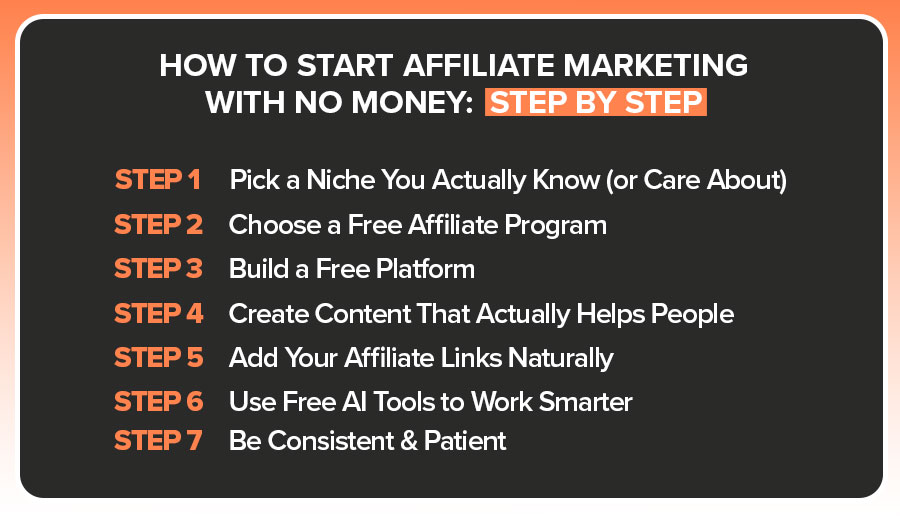 Below is each step broken down in detail.
Step 1: Pick a Niche You Actually Know (or Care About)
A niche is just a specific topic you’ll focus on. Think fitness, cooking, personal finance, travel, beauty, tech gadgets, parenting, anything where people are buying products regularly.
The biggest mistake beginners make is going too broad. “Health” is too broad. “Weight loss for new moms” is much more focused and much easier to build an audience around.
Pick something you genuinely know or care about. Why? Because you’ll be creating a lot of content about it. If you don’t care about the topic, it shows, and people won’t stick around. Ask yourself: What do I know that others might find useful? What problems have I personally solved? Start there.
Step 2: Choose a Free Affiliate Program
Once you know your niche, look for an affiliate program that is free to join. Here are a few well-known ones:
- Amazon Associates: Great for beginners, covers almost every product category
- ShareASale: Wide variety of brands across many niches
- ClickBank: Especially good for digital products with high commissions
- Impact: Hosts programs from major brands
Sign up, apply for programs that match your niche, and get your affiliate links. Most of these platforms are free to join and welcome beginners.
Step 3: Build a Free Platform
You need somewhere to share your content and affiliate links. Good news, free options are everywhere.
Blog: Start a free blog on WordPress.com or Blogger. Write helpful posts about your niche and include your affiliate links naturally.
YouTube: Create a free channel and make videos, product reviews, how-to guides, and comparisons. YouTube is one of the highest-converting platforms for affiliate marketing for bloggers and video creators alike.
Instagram: Great for visual niches like beauty, fashion, fitness, and food. Use your bio link (or a free Linktree page) to house all your affiliate links. Affiliate marketing on Instagram works especially well when you build around a specific topic and post consistently.
Pinterest: Pin content with your links. Pinterest posts stay active for months or even years, much longer than other social platforms.
TikTok: Short videos can go viral quickly, even with zero followers to start.
You don’t need all of these. Pick one, get good at it, and then expand.
Step 4: Create Content That Actually Helps People
This is the most important step. Your content has to answer real questions or solve real problems, not just be a sales pitch.
Good content ideas:
- Best (product type) for (specific person)
- How I solved (specific problem) using (product)
- (Product A) vs (Product B): Which one is worth it?
- Honest review of (product) after 30 days
Think about what someone would search for before buying the product you’re promoting. That’s your content.
Step 5: Add Your Affiliate Links Naturally
Don’t stuff links everywhere. Add them where they make sense, after you explain why a product is helpful, inside a product comparison, or in a “resources I use” section.
Always disclose that you’re using affiliate links. It’s both a legal requirement and a trust builder. Something as simple as “This post contains affiliate links; I may earn a small commission at no extra cost to you” is enough.
Step 6: Use Free AI Tools to Work Smarter
Here’s where things get exciting. Using AI tools for affiliate marketing can cut your content creation time in half for free. Tools like ChatGPT or Claude can help you brainstorm content ideas, outline blog posts, write product descriptions, create social media captions, and even suggest keywords.
You still need to bring your personal experience and voice to the content, but AI can handle a lot of the heavy lifting, so you can publish more, faster.
Step 7: Be Consistent and Patient
This is where most people quit. They post for two weeks, see no income, and walk away. Don’t do that.
Organic affiliate marketing takes 3 to 6 months before you usually see real results. That’s normal. Keep publishing, keep learning, and keep improving. The people who stick with it are the ones who eventually earn real income.
How Much Can You Make With Affiliate Marketing?
One of the most common questions, and the honest answer is: it depends. But the numbers are encouraging. According to Elementor’s breakdown of affiliate marketer income, the affiliate marketing income spectrum is one of the widest in any industry. Here’s what the data actually shows:
- 41% of affiliate marketers earn less than $1,000 per month
- 9% earn over $50,000 per month
- The average sits around $8,038 per month, but this number is heavily pulled up by top earners
Income is directly tied to experience. Affiliates with over three years in the game earn, on average, 9.45 times more than those with less than one year. The learning curve is real, but so is the payoff.
Here’s a general breakdown by stage:
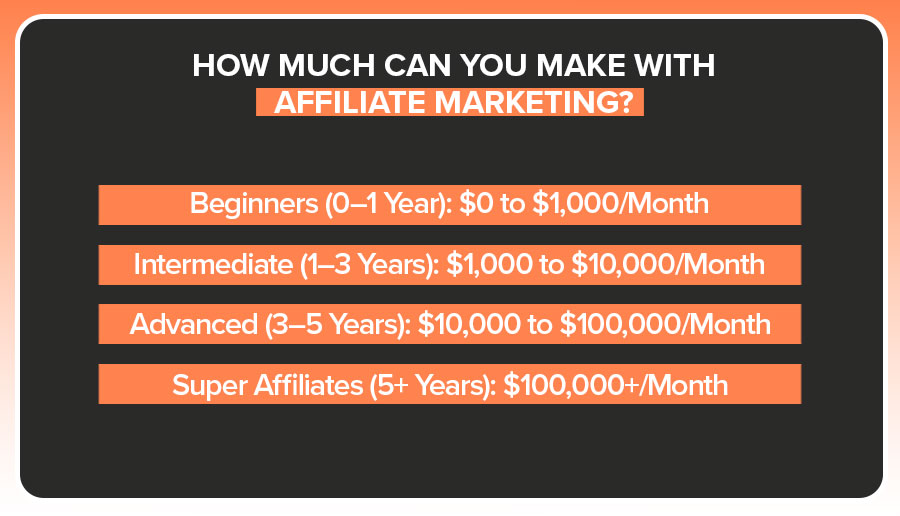
Beginners (0–1 year): $0 to $1,000/month, this is the building phase. Most people make little to nothing in the first few months.
Intermediate (1–3 years): $1,000 to $10,000/month, consistency and skill start paying off.
Advanced (3–5 years): $10,000 to $100,000/month, multiple traffic sources, an established audience, and optimized content.
Super affiliates (5+ years): $100,000+/month, a small group who have built real authority.
The key takeaway: most people quit in the first 6 to 12 months, right before results start showing up. If you can outlast that desert phase, your chances of success go up dramatically.
When thinking about affiliate marketing income vs expenses, organic affiliate marketing is a clear winner for beginners. Your costs are essentially zero, and everything you earn is almost pure profit.
What Are the Common Methods Used by Successful Affiliate Marketers?
Treat your content like a long-term library by creating reviews, guides, and tutorials that keep bringing traffic over time. Use SEO to target real search queries so people can find your content for free, and build an email list early to maintain direct access to your audience. Focus on promoting high-quality, well-researched products to build trust, and regularly track your performance to understand what drives clicks and conversions so you can refine your strategy.
Blogging for Affiliate Marketing
Content marketing involves creating blog posts, reviews, tutorials, and comparison articles to attract visitors and promote affiliate products. Affiliate marketing for bloggers is highly effective because quality content can generate long-term SEO traffic.
Many creators use blogging affiliate marketing strategies to naturally include affiliate links within helpful content. This is especially powerful for blogging and affiliate marketing. A single well-optimized article can bring in commissions for years.
Social Media and Influencer Marketing
Platforms like Instagram, YouTube, TikTok, and Facebook are widely used for affiliate promotion. Affiliate marketing on Instagram is especially popular, as influencers use reels, stories, and posts to recommend products and direct followers to affiliate links.
Top affiliates treat their content like a library, not a social feed. They create videos on reviews, comparisons, tutorials, and buying guides that live online for months or years. Over time, this library grows and keeps driving traffic without extra work.
Email Affiliate Marketing
Email marketing uses subscriber lists to send personalized product recommendations, newsletters, and promotional offers, helping affiliates build trust and increase conversions.
Your email list is yours. Even a small list of 500 engaged readers can generate consistent affiliate sales. Free tools like Kit (formerly ConvertKit) let you start building a list at no cost.
Also Read: Can Email Marketing Really Become Your Ultimate Sales Machine?
How Can I Start With an Effective Affiliate Marketing Strategy?
Your strategy needs to be intentional from day one. Focus on a specific audience, master one platform first, and stay consistent with a realistic content schedule. Create genuinely helpful, honest content that builds trust, and track your results to refine your strategy and focus on what works.
Here’s a breakdown:
1. Targeting the Right Audience
Start by getting very clear on who you’re trying to help. Not “everyone who wants to lose weight” but “busy moms in their 30s who want to lose the baby weight at home without a gym.” The more specific you are, the easier it becomes to create content that resonates, choose products that fit, and build an audience that trusts you.
2. Start With One Channel First
Commit to one platform before spreading yourself thin. Whether it’s a blog, YouTube, or Instagram, go deep on one channel first. Learn how it works, understand what content performs well, and build a real audience before adding more platforms.
3. Realistic Content Plans
Set a simple content schedule you can actually keep. Even one piece of content per week adds up quickly. Consistency beats frequency. Publishing one great post a week for a year will outperform posting daily for a month and burning out.
4. Content That Matters
Make sure your content focuses on genuinely helping people. Answer real questions, solve real problems, and be honest about the products you recommend, including their downsides. Authentic content builds trust faster than any sales trick.
5. Track Analytics
Track your results from the beginning. Note which content drives the most clicks and which products convert best. Affiliate marketing rewards people who pay attention and adapt. The best affiliates check their numbers regularly. Which pieces of content get the most clicks? Which links convert? This data tells you where to focus more of your energy. Most affiliate platforms give you this data for free inside your dashboard.
6. Select Products Carefully
Successful affiliates are picky about what they promote. They choose products they’ve actually used or thoroughly researched. Promoting bad products kills trust, and trust is everything in affiliate marketing. This is why many experienced marketers eventually focus on high-ticket affiliate marketing products, items with larger price tags that pay significantly higher commissions per sale.
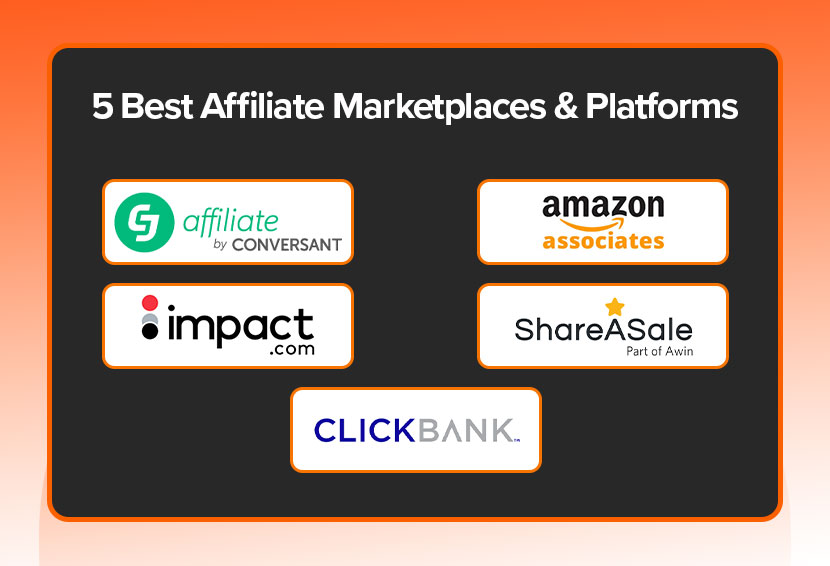
5 Best Affiliate Marketplaces and Platforms
These are the best affiliate marketing platforms for beginners starting with no budget. They’re all free to join.
1. Amazon Associates
Amazon Associates is probably the most well-known affiliate program in the world, and for good reason. It gives you access to millions of products across virtually every category. Commission rates are lower than some other platforms (usually 1%–10%, depending on category), but the conversion rate is high because people already trust Amazon. It’s a great starting point for beginners in almost any niche. Check out some affiliate marketing websites examples built around Amazon reviews; they’re easy to find and great for inspiration.
2. ShareASale
ShareASale is a large affiliate marketplace that connects you with thousands of brands across fashion, home, tech, finance, and more. Many mid-sized companies run their affiliate programs here. Commission rates vary widely; some programs offer 20–30% or more. It’s free to sign up, and the approval process for individual programs is usually straightforward for beginners who have even a basic content platform set up.
3. ClickBank
ClickBank specializes in digital products like online courses, ebooks, software, and supplements. It’s one of the oldest platforms in the industry (launched in 1998) and is especially popular with affiliates who want higher commissions. Many ClickBank products pay 50–75% commission, which makes a big difference when you’re starting out. ClickBank is beginner-friendly and doesn’t require much in the way of approval hurdles for most products.
4. CJ Affiliate
CJ Affiliate is one of the oldest and most established affiliate networks, connecting publishers with well-known global brands. It offers a wide range of products across multiple niches, along with reliable tracking, detailed reporting, and consistent payouts, making it a solid choice for beginners and experienced affiliates alike.
5. Impact
Impact Marketplace is a modern affiliate platform known for its user-friendly interface and advanced partnership tools. It connects affiliates with brands, influencers, and other partners while offering flexible commission structures, strong tracking capabilities, and automation features that help scale affiliate programs efficiently.
Conclusion
Starting affiliate marketing with no money is not only possible, but it’s also how most successful affiliates actually began. You need the right niche, a free platform, helpful content, and the patience to stick with it past those first few months where it feels like nothing is happening.
The most important thing you can do today is start. Pick your niche, sign up for a free affiliate program, and publish your first piece of content. Every big affiliate earner you admire was once on day one.