
Too busy to read? Listen to this article instead.
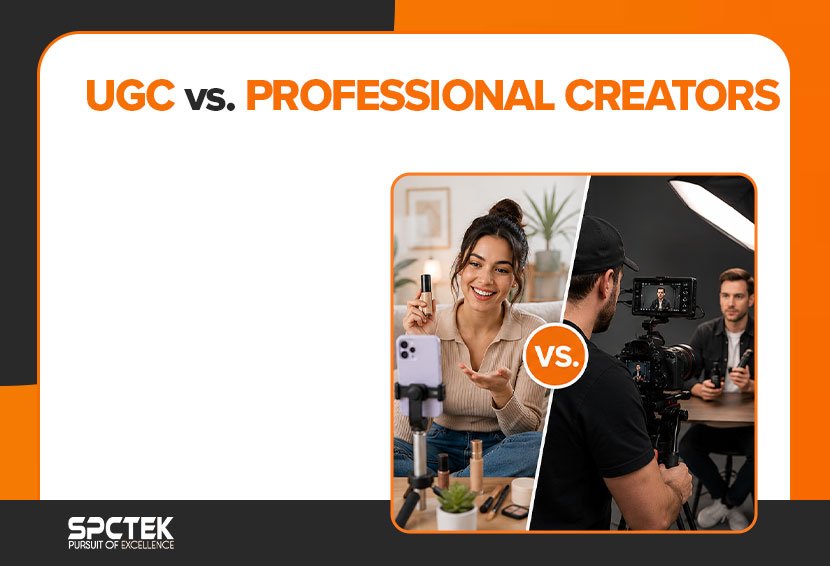
When brands plan an influencer marketing campaign today, they face a real choice. Do you go with a UGC creator who shoots raw, relatable content on their phone? Or do you work with a professional creator who brings polished videos, a large audience, and high production value?
Both paths work. But they work for different goals, different budgets, and different stages of your brand. This article breaks down exactly what each type of creator does, how they differ, and how to pick the right one for your next campaign.
What Is UGC in Influencer Marketing?
UGC influencer marketing uses content made by real people, not professional studios or celebrity accounts. UGC stands for user-generated content. A UGC creator films honest, everyday-style videos or photos of a product and hands that content over to a brand. The brand then uses it in ads, on product pages, or across social media.
So, what is the definition of UGC in influencer marketing? It is content that feels like it came from a real customer, even when a brand commissions it. It looks unscripted. It sounds personal. And that is exactly why it works.
85% of people trust UGC more than brand photos or videos. Brands use UGC creators because the content does not feel like an ad. It feels like a recommendation from someone the viewer actually knows.
What Is a Professional Creator in Influencer Marketing?
A professional creator is someone who has built a large, dedicated audience on platforms like Instagram, YouTube, or TikTok. They typically fall into the macro or mega tier, meaning they have hundreds of thousands or millions of followers.
Their content is more produced. Better lighting, edited cuts, and clear brand messaging. They often work with multiple brands and have a media kit, a rate card, and a clear content style.
The key difference is reach. A professional creator can put your product in front of a massive audience in one post. But that audience is broad. They follow the creator, not necessarily your product category. This is why professional creators work best when your goal is visibility and brand awareness at scale.
UGC Creator vs Professional Creator: What’s the Difference?
Here is where brands often get confused. A UGC creator and a professional creator are not the same thing, even when both get paid to talk about your product.
Content style:
- UGC content is raw, natural, and looks like something a real customer would post.
- Professional creator content is planned, polished, and designed to perform at scale.
Audience size:
- UGC creators usually have a small or no public following. They create content for the brand to use, not to post on their own channels.
- Professional creators have large audiences and post to their own platforms.
Platform behavior:
- UGC content performs well in paid ads, product listings, and email.
- Professional creator content performs well in organic discovery, trending feeds, and brand awareness pushes.
Cost difference:
- UGC creators charge a flat fee for content delivery, not for reach. Brands in 2025 spend around $202 per influencer collaboration on average.
- Professional creators charge based on follower count and platform, which can run into thousands of dollars per post.
What Are the Different Types of Influencer Tiers?
Not all creators are the same, and influencer marketing strategies depend heavily on which tier you work with. Here is a quick breakdown.
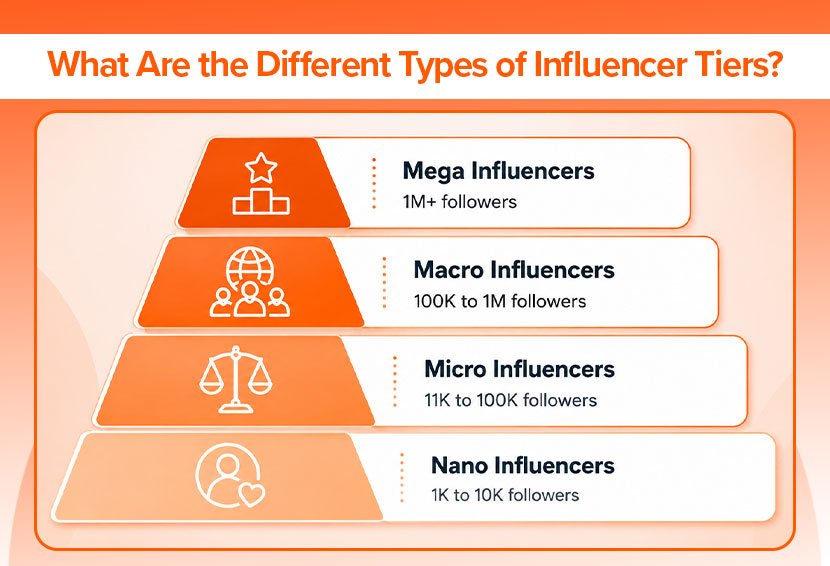
- Nano influencers (1K to 10K followers): A nano influencer is someone with a very small but highly engaged audience. They feel like a trusted friend to their followers, not a public figure. Their recommendations carry weight because their audience actually knows them. TikTok nano influencers achieve engagement rates of 10.3%, which is higher than any other tier on the platform.
- Micro influencers (11K to 100K followers): Micro influencers sit in the sweet spot between reach and trust. Micro influencers can achieve engagement rates anywhere from 7% to 20%, while macro influencers typically hover around 3% to 6%. They are niche-focused, affordable, and their audiences genuinely care about what they post.
- Macro influencers (100K to 1M followers): These are established names in a specific space. They bring strong reach and production quality. Engagement drops compared to smaller tiers, but they cover ground fast when you need visibility.
- Mega influencers (1M+ followers): Celebrities and viral personalities. Massive reach, premium pricing, and lower engagement per follower. Best for mass brand awareness, not targeted conversions.
How many followers does it take to be considered an influencer? Most platforms and marketers recognize anyone with 1,000 or more engaged followers as an influencer. The follower count matters less than the trust that the creator has built with their audience.
What Are the Benefits of Influencer Marketing by Creator Type?
The benefits of influencer marketing look different depending on which creator type you choose. Working across influencer tiers covers every base. UGC creators and nano influencers build trust and keep costs low, micro influencers drive strong engagement through loyal niche audiences, and macro and mega influencers deliver the reach needed to launch into new markets fast.
- Trust and authenticity: It comes from UGC creators and nano influencers. 92% of consumers trust recommendations from other users more than branded content. When someone who looks and sounds like your customer talks about your product, people believe them.
- High engagement: It comes from micro influencers. Their audiences are niche and loyal. A skincare micro influencer’s followers are there specifically for skincare. Your product is not interrupting their feed. It fits right in.
- Reach and awareness: It comes from macro and mega influencers. One post can reach millions of people. If you are launching in a new market or trying to get your name out fast, this is the tier that moves the needle.
- Cost efficiency: It comes from UGC creators and nano influencers. You get strong content or strong engagement without the high price tag of larger creators.
What Are the Influencer Marketing Strategies?
The strategy you use depends on your campaign goal. For a new product launch, pair UGC creators with micro influencers for high-converting content and early social proof. For a brand awareness push, go macro or mega where one or two high-visibility posts can move the needle fast.
For retargeting and conversion, lean on UGC. Raw, honest video content in paid ads sees a fourfold increase in click-through rates compared to traditional branded content. For community building, nano and micro influencers are your best bet as they spark real conversations and genuine engagement.
How to Choose the Right Influencer for Your Product
Make or figure out a specific goal. Once you know the goal, here is what to look at. Look at niche relevance, engagement rate, audience demographics, and content quality. A creator with 20,000 followers and a 12% engagement rate will outperform one with 200,000 followers and a 1.5% rate. Check who actually follows them, whether their content feels real, and whether your product fits naturally into it. The right influencer comes down to fit, not size.
- Niche relevance: Does this creator’s content match your product category? A fitness influencer promoting a protein brand makes sense. The same influencer promoting accounting software does not.
- Engagement rate over follower count: A creator with 20,000 followers and a 12% engagement rate is more valuable than one with 200,000 followers and a 1.5% rate. Look at comments, not just likes.
- Audience demographics: Who actually follows this creator? Age, location, and interests matter more than raw follower numbers. Most platforms let you see this data before you commit.
- Content quality: Watch their last ten posts. Does the content feel real? Do their followers respond to it? Is there a natural fit for your product?
Knowing which is the right influencer for your product comes down to fit, not size. A smaller creator who genuinely uses products like yours will always outperform a bigger creator who treats your product like a sponsored interruption.
Real Influencer Marketing Examples
Here is how these strategies play out in practice. A skincare brand running UGC first-impression videos as TikTok ads saw CTR jump because the content felt organic rather than branded. Meanwhile, a home goods brand partnered with a 400K macro influencer, hit 1.2 million views on a single Reel, and sold out during launch. Different goals, different tiers, both delivered.
Example 1: UGC for a skincare brand (paid ads)
A skincare brand hires five UGC creators to film honest first-impression videos using their new serum. The brand runs those videos as TikTok ads without any logo-heavy intro or branded music. The content looks like organic reviews. CTR jumps compared to their standard ad creative. This is one of the most common and effective influencer marketing examples for DTC brands today.
Example 2: Macro influencer for a product launch
A home goods brand partners with a home decor macro influencer (400K followers on Instagram) for a new product launch. One Reel hits 1.2 million views. Brand search volume spikes for two weeks. The product sells out during the launch window.
Both approaches worked. But they served completely different goals.
How to Run an Influencer Marketing Campaign
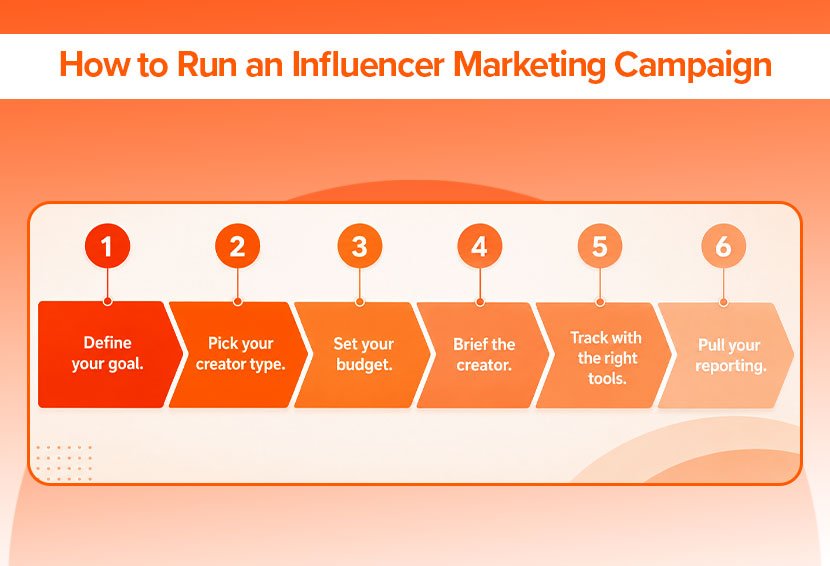
Here is a straightforward step-by-step answer to running your first or next influencer marketing campaign.
- Step 1: Define your goal. Awareness, conversions, content creation, or community growth. Pick one primary goal before anything else.
- Step 2: Pick your creator type. Match the creator tier to your goal using the strategy framework above.
- Step 3: Set your budget. Factor in creator fees, product samples, and any paid amplification of the content.
- Step 4: Brief the creator. Give them clear direction on key messages, what not to say, and any platform requirements. Let them keep their voice.
- Step 5: Track with the right tools. Use influencer marketing tools to monitor performance in real time.
- Step 6: Pull your reporting. Good influencer marketing reporting tracks engagement rate, CTR, conversions, and content saves. Not just impressions.
What Are the Best Influencer Marketing Tools
(logos of the marketing tools as infographics)
Each platform serves a different need. Upfluence is best for discovery and management, HypeAuditor for vetting audience quality, and Collabstr for finding UGC creators with transparent pricing. Aspire handles end-to-end campaign management for ongoing programs, while Later Influence is the go-to for detailed analytics and reporting. Choosing the right tools makes every step of the process easier.
Here are the ones worth knowing.
- Upfluence: Good for finding and managing creators across multiple platforms. Strong filtering by niche and engagement rate.
- HypeAuditor: Best for audience quality checks. It tells you if a creator’s followers are real and engaged, not bought.
- Collabstr: A marketplace specifically for finding UGC creators and influencers. Transparent pricing and creator portfolios.
- Aspire: Built for end-to-end campaign management. Strong for brands running ongoing influencer programs with multiple creators.
- Later Influence (formerly Mavrck): Good for influencer marketing reporting with detailed analytics dashboards.
Pick tools that match your campaign size. A small brand running two UGC campaigns a month does not need an enterprise platform. Start simple, track what matters, and scale from there.
You can learn more about how UGC and AI videos are reshaping content creation and go deeper on how UGC fits into broader influencer marketing strategies through
Conclusion
The UGC vs. professional creator debate does not have a single right answer. It depends on your goal, your budget, and where your audience is in their buying journey.
If you want trust and conversion, UGC and micro influencers get you there. If you want reach and visibility, macro and mega creators do the job. The smartest campaigns use both. Start with UGC for ad content, add micro influencers for social proof, and layer in a macro creator when you need to scale fast.