How to Improve Amazon Keyword Ranking and Drive Sales?
To improve Amazon keyword rankings and increase sales, research a mix of short- and long-tail keywords, optimize titles, bullet points, and backend fields, improve images and A+ Content for better conversions, and regularly track performance to refine keywords based on sales data.
Amazon’s dominance in the e-commerce industry can’t be overstated. It accounts for almost 40% of the e-commerce market sales in the US, with anaverage daily worldwide sales revenue of over $1.5 billion.
Thus, it’s a no-brainer that selling on Amazon allows you to tap into this gigantic revenue pool. But with millions of sellers and zillions of listed products, getting your product to rank and become visible is the toughest challenge. A buyer can’t buy an invisible thing, right?
But the good news is that Amazon’s search engine doesn’t discriminate between big and small businesses. In fact, themajority of Amazon sales come from small and medium-sized businesses. Your product can rank higher and be more visible, too; you just need to do the right things.
This blog gives you the most effective strategies to improve the Amazon keyword ranking for your listings and increase sales volume. It also discusses some additional best practices for better product visibility and ranking.
What is Amazon Keyword Ranking Optimization?
Amazon keyword ranking optimization refers to optimizing your product listings to rank higher in Amazon search results using the right keywords. It involves meticulous research and competitor analysis, along with the appropriate placement of different kinds of keywords.
Apart from keyword optimization, some other important factors also play a key role in your product ranking. These factors include your Amazon account health, sales and conversions, shipping performance, customer feedback, and paid tools like Amazon PPC and A+ content.
Before discussing strategies for Amazon keyword ranking optimization, let’s review a few essentials, including Amazon’s search algorithm, how customers interact with products on Amazon, and factors that influence Amazon search rankings.
How Amazon’s Search and Ranking System Works
Amazon’s search and ranking system is powered by its renowned A9 algorithm.
A9 is trained on massive data gathered from users’ queries, clicks, purchases, browsing patterns, and other interactions. Based on machine learning and natural language processing (NLP), A9 uses this data to identify search intent and provide the most relevant search results and recommendations.
Although Amazon regularly upgrades its algorithm, some principal features remain constant. We know that Amazon doesn’t really disclose the ‘behind the scenes’ of its search system, but experts have revealed some of its key aspects, which include:
Semantic search: A9 doesn’t just match exact keywords; it can interpret the relationship between words. This ability allows it to ‘read between the lines’ and discern the context of the query. For instance, if you search ‘puma running,’ A9 knows you are looking for the footwear brand, not the animal.
Page indexing: Every product page on Amazon is indexed by A9’s crawlers, which gather information such as titles, bullet points, descriptions, and reviews. This information helps Amazon provide the most relevant results for search queries.
Clickstream analysis: A9 analyzes user behavior on Amazon by recognizing user interaction patterns. This enables it to detect which results customers find helpful for a particular query and which they don’t. This data is then used to refine the search results.
Query refinement: A9 can adapt to searches in real-time. As users rewrite or refine their search queries, A9 learns from these adjustments and refines the search results.
Personalization: Based on a user’s shopping history, interaction pattern, and search history, A9 provides customized results that better match the user’s personal preferences.
How AI Search on Amazon is Impacting Visibility?
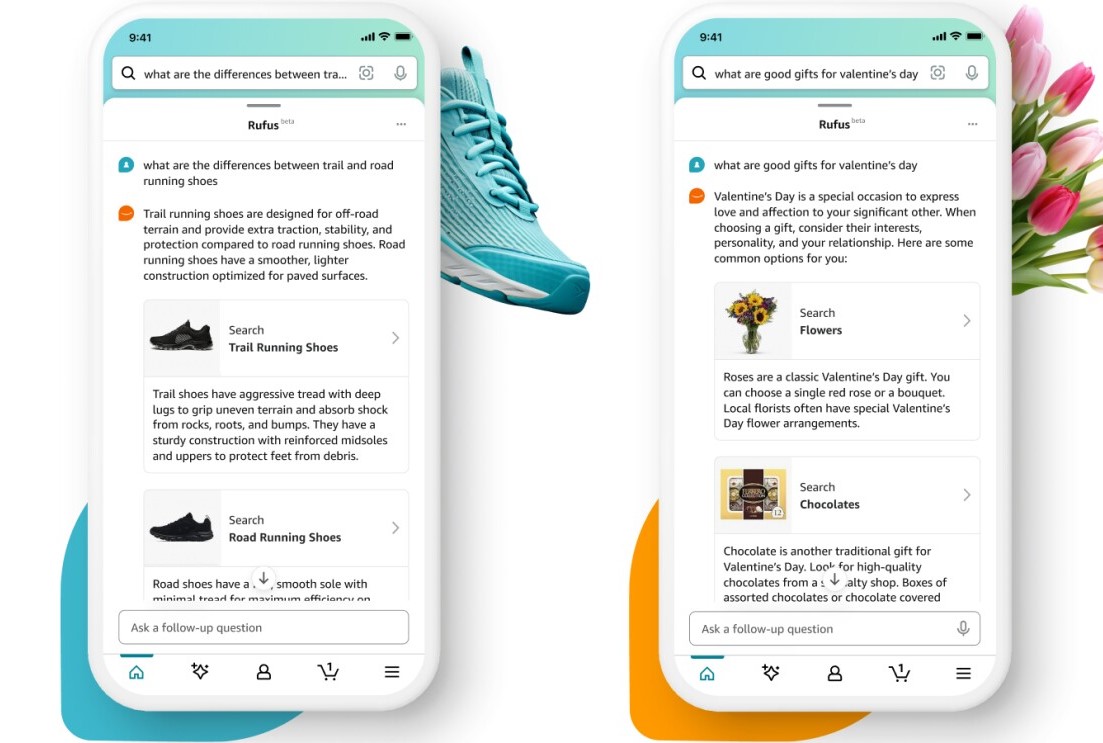
Amazon’s AI search feature Rufus plays an important role in how shoppers discover products by focusing on intent, context, and conversational queries rather than simple keyword matching.
Optimizing for AI search is important because it improves the clarity with which your product is understood, increases visibility in recommendation-based results, and creates buyer trust. As Amazon continues shifting toward AI-driven discovery, sellers who optimize their listings for clarity, intent, and completeness gain a long-term advantage in both visibility and conversions.
How to Optimize Your Amazon Listings for Rufus (Amazon’s AI Search Assistant)?
Optimizing for Rufus requires clear, intent-driven content that explains your product, answers shopper questions, uses natural language, maintains listing consistency, and reinforces trust through reviews, Q&A, and strong conversion signals.
Rufus pulls information from your entire listing, including titles, bullet points, descriptions, A+ Content, reviews, and Q&A, so every section should clearly communicate what the product is and who it is designed for.
Titles and bullet points should focus on benefits, use cases, compatibility, and problem-solving features instead of relying solely on keyword placement.
Product descriptions and A+ Content should provide detailed explanations, feature highlights, and comparison information, as Rufus frequently uses this content to summarize and differentiate products.
Natural, conversational language and semantic variations should be used throughout the listing because Rufus understands intent and meaning rather than exact keyword matches.
Consistency across all listing elements, such as size, material, features, and specifications, is essential since Rufus cross-checks data for accuracy and trust.
Customer reviews that mention real experiences, use cases, and outcomes help Rufus better evaluate product relevance and recommendation potential.
Actively managed customer Q&A improves Rufus’s ability to respond to shopper questions and surface your product in relevant AI-driven results.
Strong conversion signals, including high-quality images, competitive pricing, and stable sales performance, indirectly support Rufus visibility by signaling product reliability.
Key Factors Influencing Amazon Search Rankings
Relevant keywords are easily one of the most important factors influencing Amazon search rankings. Effectively using keywords that match customer search intent and product category is the necessary beginning point to rank your Amazon listing.
The keywords should be carefully scattered throughout the product detail page, including the titles, bullets, descriptions, and image alt texts. This not only helps improve your Amazon keyword ranking but also aids the search system in retrieving your
A product for search results by matching user intent with your keywords.
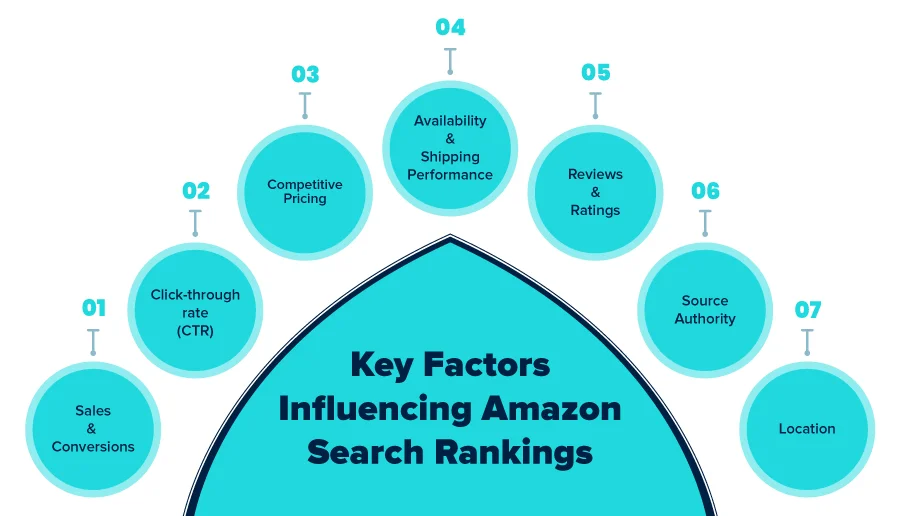
Besides keywords, Amazon also considers several other ranking signals that factor into its search result rankings, which include:
Sales and Conversions
Click-through rate (CTR)
Competitive Pricing
Availability and Shipping Performance
Reviews and Ratings
Source Authority
Location
Remember, Amazon is a marketplace that aims to sell as many products as possible, so it naturally ranks high-performing products higher.
How Users Interact with Products on Amazon
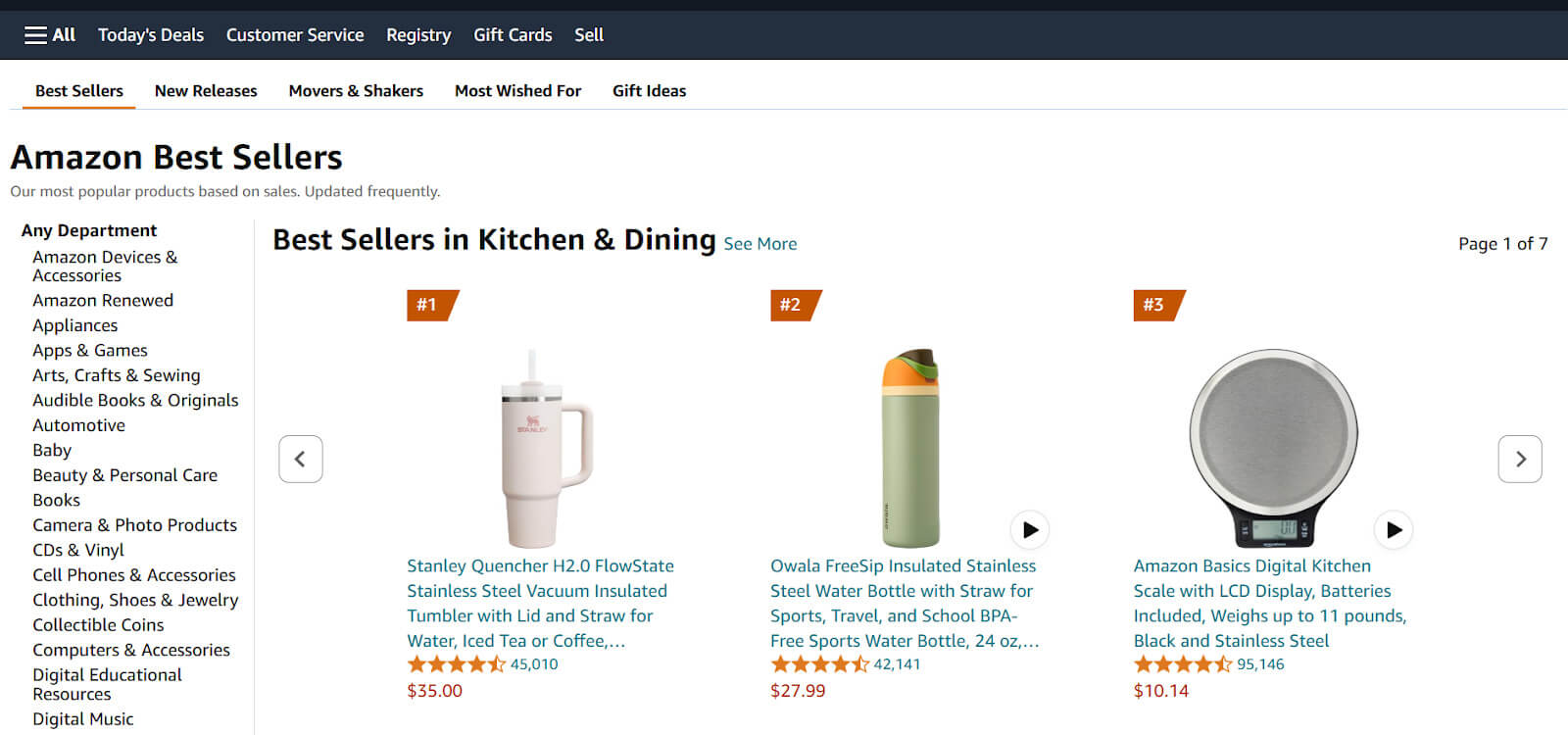
Buyers primarily type their queries in the search box to find desired products; however, there are many other interactive features on the Amazon result page. For instance, users can see the Best Sellers, New Releases, Movers & Shakers, andMost Wished fortabs at the top of the page.
Also, there is a sidebar menu in the top left corner that shows the primary and secondary product categories. Buyers can also use a filter in the top right corner to sort the products based on price, reviews, and best sellers.
So, all these features should be considered when optimizing your listings for Amazon keyword ranking.
Essential Strategies for Improving Amazon Keyword Ranking
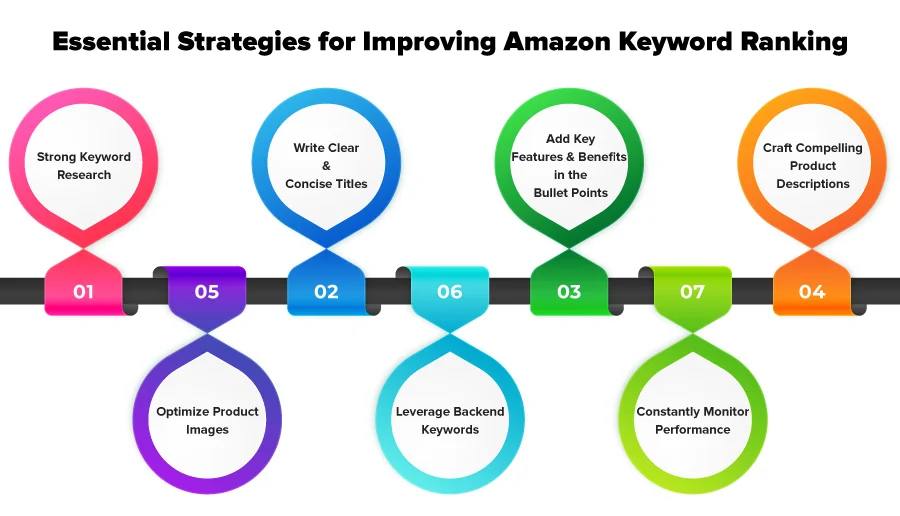
The following are the essential strategies to enhance your Amazon keyword ranking; we will also review some additional best practices for ranking higher on Amazon.
1. Strong Keyword Research
You can’t just rely on gut feeling or casual browsing when picking your primary and secondary keywords. Attention to detail and due diligence are vital for Amazon keyword analysis and research.
You need to know which words and phrases customers use when looking for a product; then you need to place those keywords accordingly on your product detail page to achieve maximum results.
Here are a few strategies to consider for keyword research:
Use the Amazon search box: Enter various keywords in the search box and see the autocomplete options in the drop-down menu. Use these suggestions to create an initial list of keyword ideas.
Analyze Competitor Keyword: This is an important part of keyword research. Reviewing Amazon competitor keywords and phrases gives you a real-world picture of the Amazon keyword ranking landscape.
Use SEO Tools: Manual research can only take you so far, so you need Amazon SEO tools for advanced research. SEO tools provide you with the search volume, traffic potential, keyword difficulty, Cost-per-click estimates, and related keywords.
Balance Short and Long-Tail Keywords: Users use both general words and specific phrases for product search. The keywords that are intended to cover a broad category of products are called short-tail keywords. Search terms like ‘men’s shoes’ or ‘seat covers’ are short-tailed keywords.
On the other hand, long-tail keywords are longer and more specific. The search intent behind these keywords is narrowed down, so they have a smaller search volume. Search terms like ‘ water-resistant synthetic seat covers’ are long tail keywords.
Always use a mix of short- and long-tail keywords on your detail page. Short-tail keywords have a high search volume but are difficult to rank for. While long-tail keywords have a lower search volume, they might get more conversions.
2. Write Clear and Concise Titles
A clear product title that complies with Amazon guidelines is essential for Amazon keyword ranking. Think from your customer’s perspective and ensure your Amazon product title provides relevant information like product type, brand, size, color, etc.
The product title is the best place to use your primary keywords. But remember to keep the title concise by keeping it between 60 and 80 characters. You’ll get to add more keywords in the other sections of the product detail page, so don’t worry.
3. Add Key Features and Benefits in the Bullet Points
The bullet point section provides a great opportunity to highlight your product’s key features and benefits. When crafting the bullet points, use the keywords wisely for every feature and benefit by keeping the customer search intent in view.
You can also include the related terms in your bullet points, but avoid keyword stuffing and keep user experience in mind. Start each bullet point with a one- or two-word description and then provide a brief explanation of not more than 100 characters. Use fragments because complete sentences can get longer.
4. Craft Compelling Product Descriptions
The product description section allows you to expand on the key features and benefits; thus, it’s the perfect place to use secondary keywords. Also, you should provide the necessary details about the product to help your customers assess your product, including product material, size, quantity, dimensions, care instructions, etc.
Again, avoid keyword stuffing. If you use a keyword once in the product description, use a variation to include it again. This will allow you to incorporate as many valuable keywords as possible without affecting the user experience.
Also Read: Amazon Product Description Guide: 10+ Tips to Maximize Conversions
5. Optimize Product Images
Always ensure compliance with Amazon’s image requirements. If your images fail to meet the requirements or violate Amazon policies, they will not be uploaded. You can check out Amazon’s product image guidelineshere.
Follow product photography best practices based on your product category. Here are some tips to improve your product images for ranking:
Include keywords in the image alt text
Showcase your product from various angles
Use professional, high-quality photographs
Ensure the product occupies 85% of the space
Ensure the images are authentic
6. Leverage Backend Keywords
Besides using keywords on your detail page, use backend search terms for your Amazon keyword ranking. Backend keywords are not visible on the product detail page or Amazon search results; they are only meant to be identified by the Amazon algorithm for product search results.
You can use the backend keyword section to add those keywords that don’t naturally fit into your product detail page. When adding backend keywords, keep the following things in mind:
Use lowercase letters only
Use spaces to separate keywords rather than punctuation marks
Skip articles and prepositions.
Use synonyms, abbreviations, and alternative names for the product
Avoid unnecessary words
7. Constantly Monitor Performance
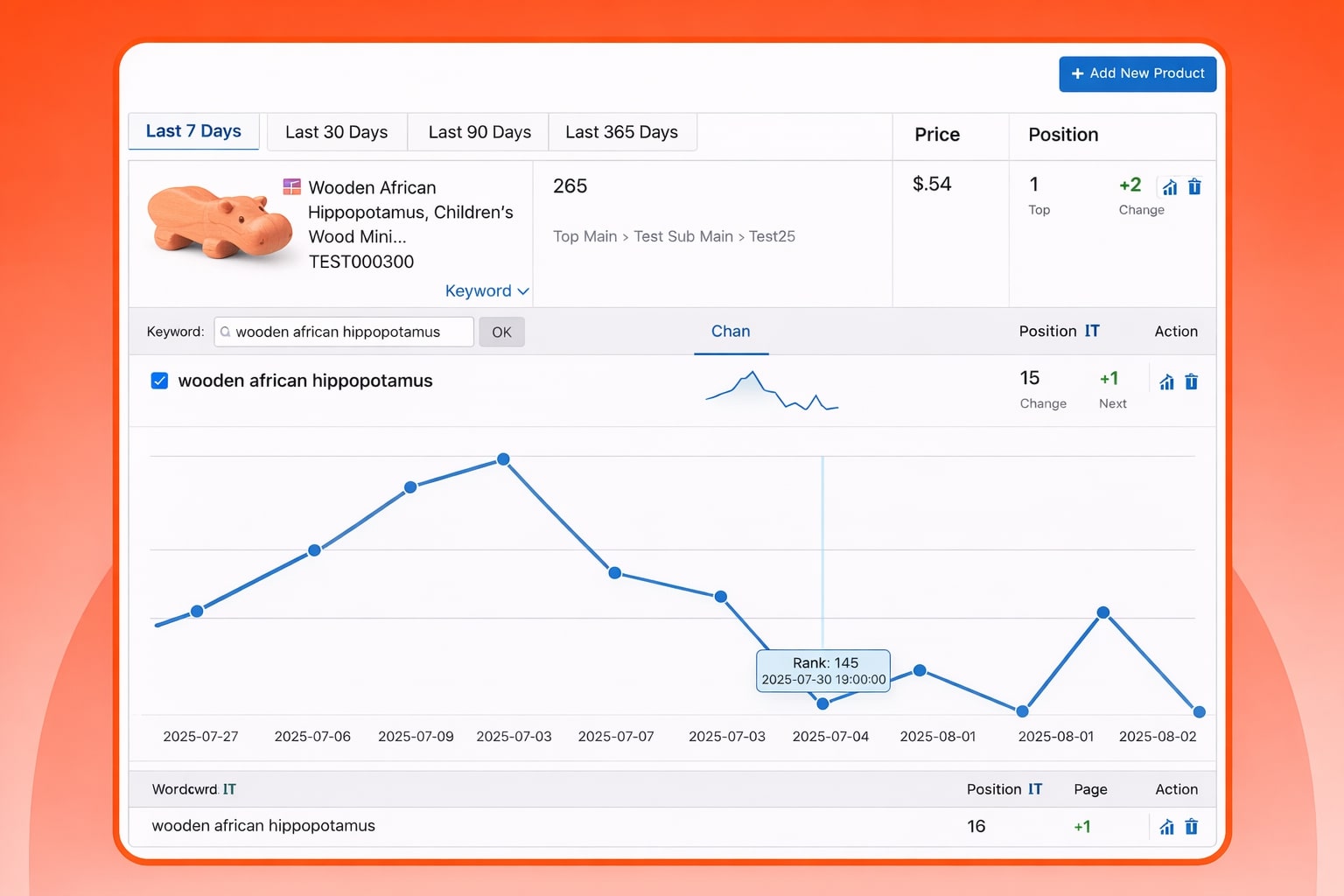
Keyword optimization is not a set-and-forget thing. You must monitor your Amazon keyword ranking once your product listings are live. It’s crucial to see which aspects of your keyword strategy work and which need revision.
You manually search your product ranking in the search results by searching the relevant keywords; however, it is recommended to use keyword tracking tools to monitor your ranking performance. These tools allow you to see the fluctuations in your listing’s performance in terms of rank, page position, search query volume, clicks, and purchases.
Additional Best Practices to Rank on Amazon
1. Take Advantage of A+ content
You can enhance your Amazon listings with A+ content if you’re a registered brand. This tool lets you use customized layouts and premium visuals to make your product listings stand out.
A+ Content can elevate your product description with more engaging visuals and storytelling, which can help build trust and increase sales.
Amazon PPC ads help increase visibility by displaying the sponsored product in important places on the search results page. This helps increase sales volume, which, in turn, boosts the ranking and visibility of the product listings.
Offering competitive prices is essential for driving sales and being eligible for the Buy Box. Evaluate your listing prices based on your production, sourcing, storage, and shipping costs, and ensure you have an appropriate profit margin.
Analyze your competitors and research similar products to get an estimate of the market price of your product. You can also useAmazon’s Automate Pricing tool to automate pricing across your inventory.
4. Improve Customer Service and Account Health
Positive customer feedback plays an important role in search result rankings. Keeping the Order Defect Rate (ODR) below 1% and
What Are the Best Amazon Keyword Ranking Tools (With Starting Prices)?
Here’s a list of the best Amazon keyword tracking tools we have tested:
1. Helium 10: Helium 10 is a powerful all-in-one Amazon seller toolkit designed for keyword tracking, product research, and listing optimization. It helps sellers monitor keyword rankings, discover high-converting search terms, and optimize listings to improve visibility and sales. Starting Price: $39/month
2. Jungle Scout: Jungle Scout is a beginner-friendly Amazon research tool that offers reliable keyword research and rank tracking features. It’s ideal for sellers who want clear insights into product demand, keyword performance, and competitive positioning. Starting Price: $29/month
3. AMZScout: AMZScout provides keyword tracking and competitor insights through an easy-to-use web app and browser extension. It allows sellers to monitor keyword ranking changes and analyze competing products effectively. Starting Price: $29–$49/month
4. ZonGuru: ZonGuru is a comprehensive Amazon tool offering keyword research, rank tracking, PPC support, and listing optimization features. It’s well-suited for sellers looking to combine organic ranking improvements with paid advertising strategies. Starting Price: $49/month
5. SellerApp: SellerApp focuses on keyword tracking combined with advanced PPC optimization and analytics. It helps sellers identify profitable keywords, track ranking performance, and optimize advertising campaigns for better ROI. Starting Price: $79/month
6. MerchantWords: MerchantWords is a popular keyword research tool that provides accurate search volume data and keyword insights. It’s especially useful for sellers who want to discover high-demand keywords and build data-driven ranking strategies. Starting Price: $35/month
7. TopBSR: TopBSR is a lightweight Amazon keyword and ranking tracker with simple pricing tiers. It’s a good option for sellers who want basic keyword ranking insights without investing in a full all-in-one tool. Starting Price: $15/month
How Can I Improve My Product Rankings Using Keyword Tracking Tools?
You can improve your product rankings by using keyword tracking tools to identify which keywords are underperforming, then optimizing your title, bullets, and backend terms for those keywords. Monitor ranking trends, connect rank changes with sales and conversion data, and use PPC to grow sales velocity for target keywords. Continuously track results, adjust your listing and ads, and focus on trends rather than daily fluctuations to strengthen long-term rankings.
1. Understand What Amazon Keyword Ranking Does (and Doesn’t)
Amazon keyword ranking shows where your product appears in search results for specific terms. Tracking tools help you monitor ranking positions, see changes over time, and compare your placement against competitors. These tools do not improve Amazon keyword ranking by themselves. They simply show what is working and what needs improvement in your listing or strategy.
2. Choose the Right Keywords to Track for Amazon Keyword Ranking
Not all keywords are equally valuable for Amazon keyword ranking. Focus on search terms with clear buying intent instead of chasing high search volume alone. Primary keywords should be highly relevant with strong volume, secondary keywords should support visibility, and long-tail keywords often deliver higher conversions. Tracking 20 to 50 keywords per ASIN keeps Amazon keyword ranking data focused and actionable.
3. Track Amazon Keyword Ranking at the ASIN Level
Amazon keyword ranking applies to individual products, not brands. Make sure your tracking tool measures rankings by ASIN so you see accurate visibility. Tracking both desktop and mobile results, along with location-based data when needed, helps you understand true Amazon keyword ranking performance rather than averaged results.
4. Use Amazon Keyword Ranking Data to Optimize Your Listing
When Amazon keyword ranking drops or stays low, use that insight to guide optimization. Start with the title, which has the strongest impact on ranking. Then, improve bullet points to increase relevance and conversions, followed by backend search terms for indexing support. Product descriptions and A+ content mainly help conversions, which indirectly protect and improve Amazon keyword ranking.
5. Connect Amazon Keyword Ranking Changes With Sales
Amazon keyword ranking should always be reviewed alongside sales data. If rankings rise and sales increase, your listing is aligned with shopper intent. If rankings fall along with sales, conversion issues, or stronger competitors may be the cause. High Amazon keyword ranking with low sales often signals a mismatch between the keyword and the product offer.
6. Use PPC to Support Amazon Keyword Ranking
Paid advertising plays a key role in improving Amazon keyword ranking. Running exact-match ads for important keywords can boost sales velocity and relevance signals. Track organic ranking changes after seven to fourteen days and shift ad spend toward keywords that improve organic placement. When managed correctly, PPC can strengthen long-term Amazon keyword ranking.
Amazon keyword ranking tools reveal which competitors outrank you and when new products enter top positions. Sudden ranking jumps often come from promotions or aggressive ads. Studying competitor pricing, reviews, images, and listing structure helps you understand what is influencing Amazon keyword ranking and how to respond.
8. Focus on Amazon Keyword Ranking Trends, Not Daily Changes
Daily ranking changes are normal and often misleading. Instead of reacting to every movement, analyze seven-day and thirty-day trends. Consistent movement is what matters for Amazon keyword ranking. Make one change at a time and measure its impact before making additional updates.
9. Set Amazon Keyword Ranking Alerts and Benchmarks
Alerts help you respond quickly to sudden Amazon keyword ranking drops, especially for top-performing keywords. Set clear benchmarks so performance is easy to evaluate. Primary keywords should aim for top five to ten positions, secondary keywords for top ten to twenty, and long-tail keywords for top ten results.
10. Build a Long-Term Amazon Keyword Ranking System
Strong Amazon keyword ranking comes from a continuous process. Track rankings, analyze performance, optimize listings, measure results, and repeat. When keyword tracking is combined with listing optimization, conversion improvements, PPC campaigns, and review management, it becomes a reliable system for long-term growth on Amazon.
Sum-up
Amazon is a great platform for doing business if you can leverage its search system for optimum product ranking. You can significantly improve your Amazon keyword ranking and product visibility by focusing on targeted keyword research, optimizing product titles and descriptions, and enhancing images and backend keywords.
Additionally, A+ content, PPC ads, and great customer service can amplify reach and conversion potential further.
Ranking keywords on Amazon involves optimizing product listings with high-quality, relevant keywords that match common customer searches. Techniques include using relevant keywords in the title, bullet points, and description, along with backend search terms. Additionally, using sponsored ads to increase visibility can also boost organic ranking by increasing the product’s sales volume.
Platinum keywords were previously used to optimize listings for Amazon’s “platinum sellers,” a category that no longer exists. Although the term is outdated, it refers to special keywords that Amazon granted to selected sellers for enhanced listing visibility. Now, all sellers generally focus on standard backend keywords to improve their search ranking.
Tools such as Helium 10 or Jungle Scout can reveal high-traffic keywords by analyzing search volumes and competition levels. Also, Amazon’s search bar autocomplete, which displays popular search queries, helps find highly searched keywords.
Amazon keyword research involves using both Amazon’s autocomplete feature and external tools to identify keywords relevant to a product. By analyzing competitors’ listings and high-ranking keywords, sellers can compile a list of keywords that have high search volumes and match user intent. Incorporating short-tail and long-tail keywords that capture general and specific searches is also effective for niche targeting.
Yes, keyword research is essential for Amazon listings as it ensures that your product appears in relevant searches which directly impacts its visibility and sales potential. Targeting high-volume, relevant keywords increases the chances of being discovered by customers, improving organic ranking and conversion rates on the platform.