- Case Study
B2B Email Marketing Case Study: 92% Revenue Growth in 3 Months
In this email case study, we’ll dissect the exact strategy we used to get 92% increase in attributed email revenue for a B2B beekeeping equipment business. We’ll also show how we built a strong deliverability score and solved the nagging bounce rate issue.
The Challenge
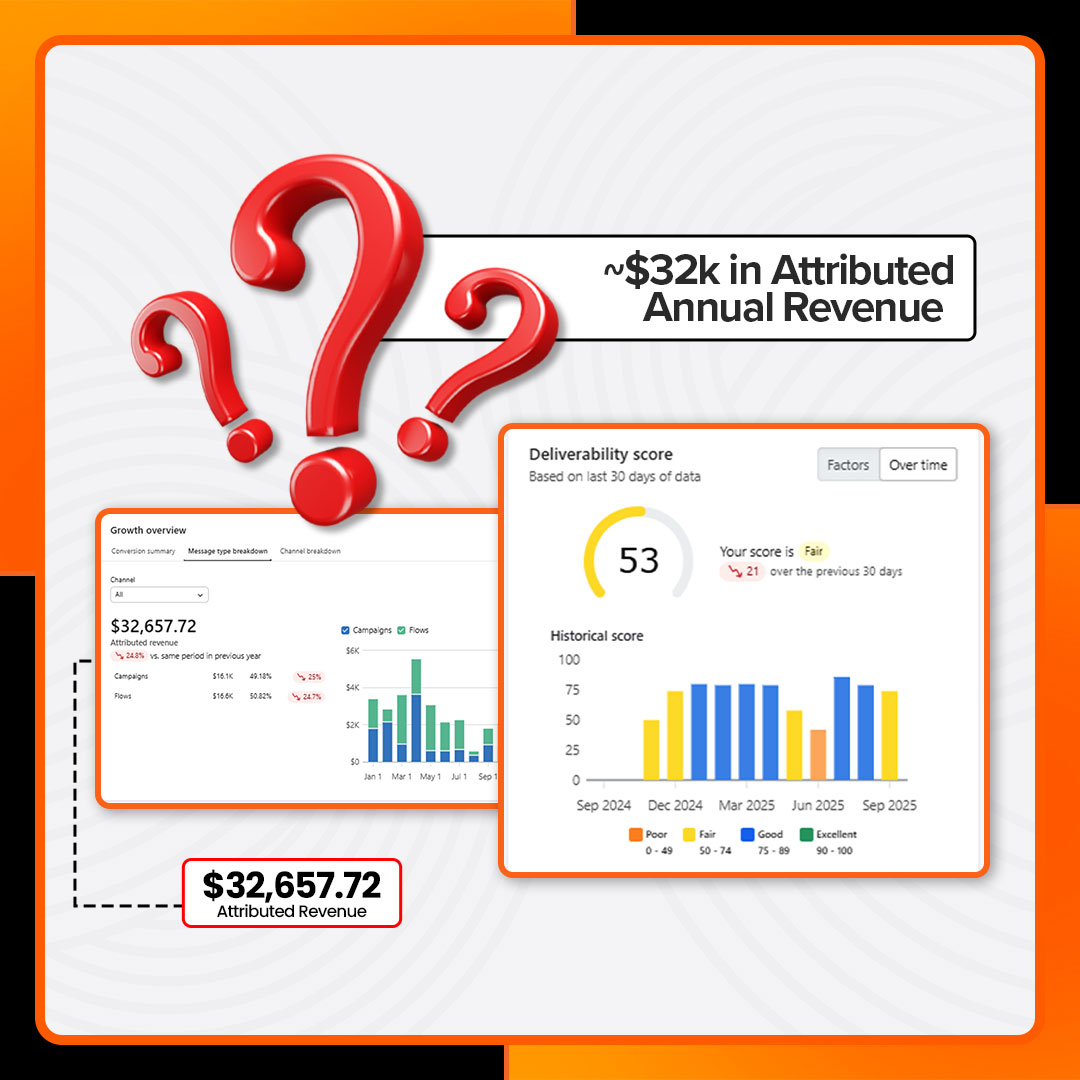
Imagine having 44,000 people who have willingly given you their email address, 44,000 potential customers who have, at some point, raised their hand and said: “Yes, I want to hear from you.” Now imagine generating just $32,000 a year from all of them combined.
That’s less than 73 cents per subscriber, per year.
That’s the situation when this B2B beekeeping equipment business came to us. On paper, they had everything they needed for a thriving email program. But the email channel? It was practically silent.
- Their automations, the flows that should have been quietly converting customers around the clock, were broken and converting at under 2%.
- Their deliverability score had slipped to 53 out of 100, meaning a huge chunk of their emails weren’t even reaching inboxes in the first place.
- They were landing in spam folders, unseen and unopened. And every single campaign they sent went to 100% of their list, with zero segmentation, the same message, to every person, every time, regardless of who they were or what they’d bought.
The Strategy & Solution
When the foundation is broken, more volume just means more damage, more spam complaints, more unsubscribes, a worse deliverability score, and an audience that tunes you out permanently.
How we started at the bottom and built up:
Phase 1: Foundation & Data Hygiene: We cleaned the list, removing unengaged profiles that were actively harming sender reputation. We corrected the DNS authentication setup. We established a sending cadence that gradually rebuilt trust with ISPs. It’s unglamorous work, but skipping it means everything else fails.
Phase 2: Automation Rebuild: The existing flows needed to be rebuilt from scratch. We reconstructed five core automation sequences: a Welcome Series for new subscribers, Abandoned Cart and Browse Abandonment flows to recover lost revenue, a Post-Purchase sequence to drive repeat buying, and a Winback flow to re-engage lapsed customers.
Phase 3: Smart Segmentation: We introduced RFM-based segmentation, grouping subscribers by recency, frequency, and monetary value. Champions who buy regularly got one message. At-risk customers who hadn’t purchased in months got another chance. One-time buyers who’d never returned got a third.
Phase 4: Design & Copy Optimization: Strategy without execution is just a document. We redesigned email templates to be mobile-first, rewrote copy with sharper calls to action, and embedded social proof and testimonials at the moments where customers tend to hesitate. Subject lines were A/B tested consistently.
The Results:
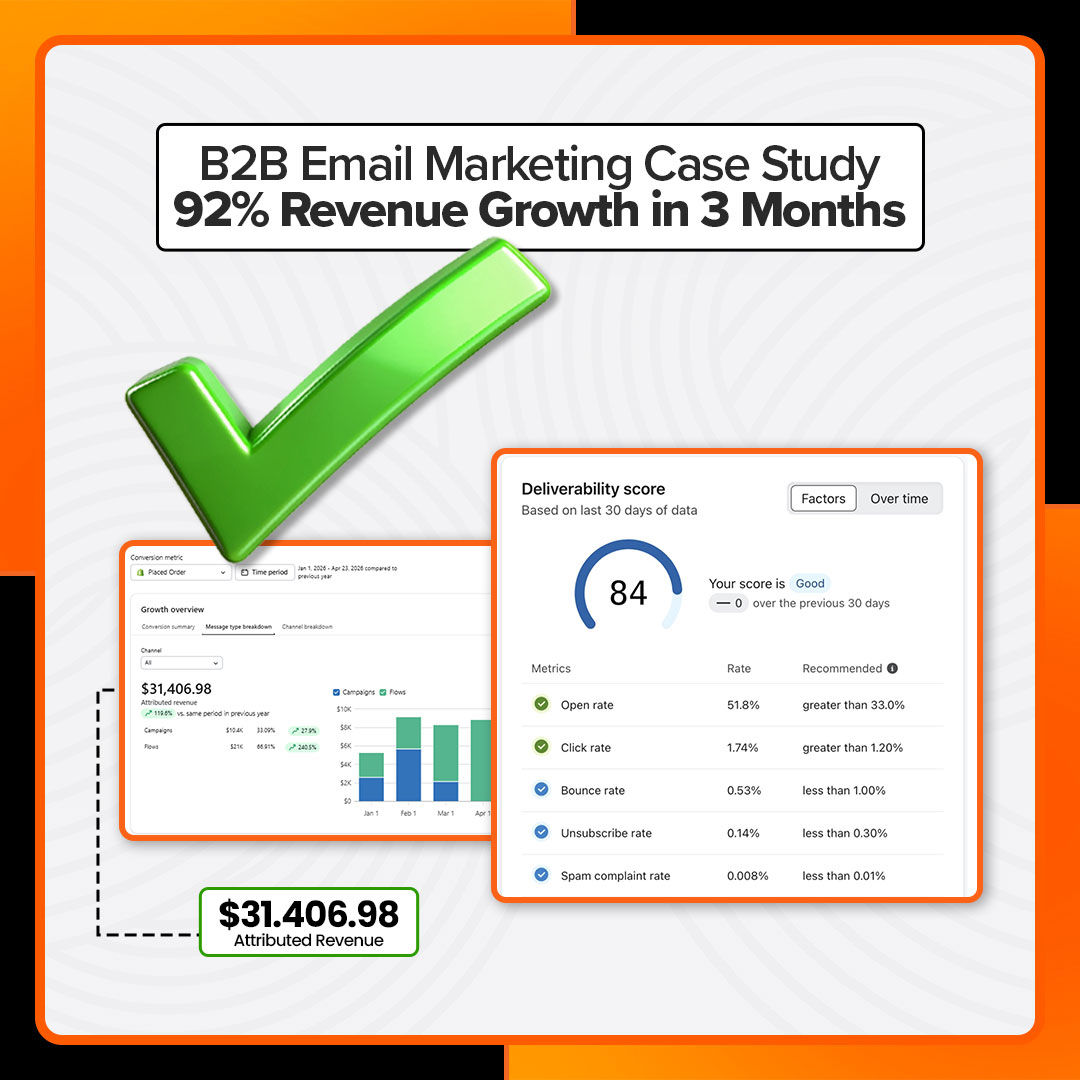
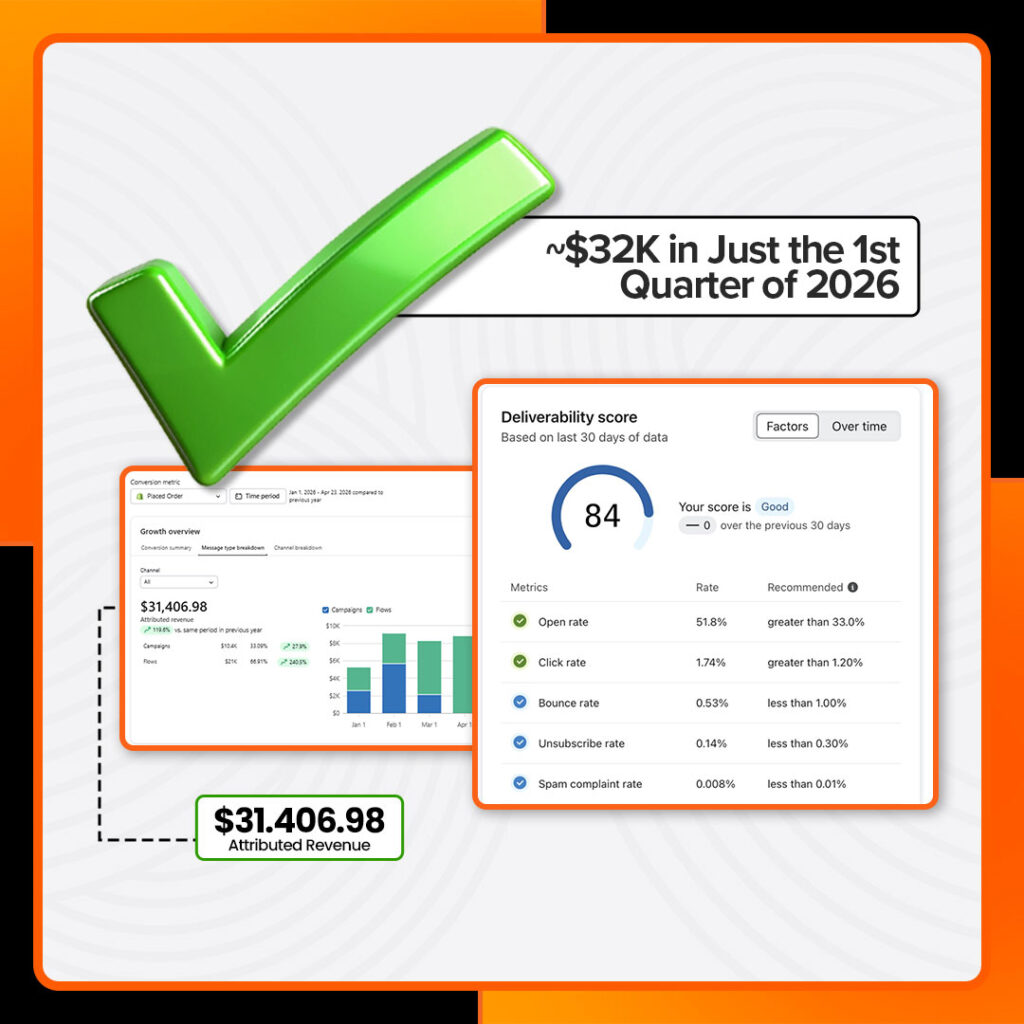
- Email revenue reached $31,406.98 in just the first quarter, up 92% year-over-year.
- Automated flow revenue grew 240%, from $5K to $12K+ monthly.
- Flows now generate 66.91% of total email revenue automatically.
- Deliverability score improved from 53 to 84 (“Good” status).
- Open rates hit 51.8%, well above the 33% benchmark.
- Click rates reached 1.74% vs. the 1.2% industry average.
- Bounce rate dropped to 0.53%, below the 1% threshold, and spam complaints fell to just 0.006%.
- Revenue per recipient increased by 74%.
- Average order value from email sales rose 77.8%.
- List clean-up saved $1,740 annually in platform fees.
The same 44,000-person audience generated significantly higher revenue through an improved email strategy.