
Too busy to read? Listen to this article instead.
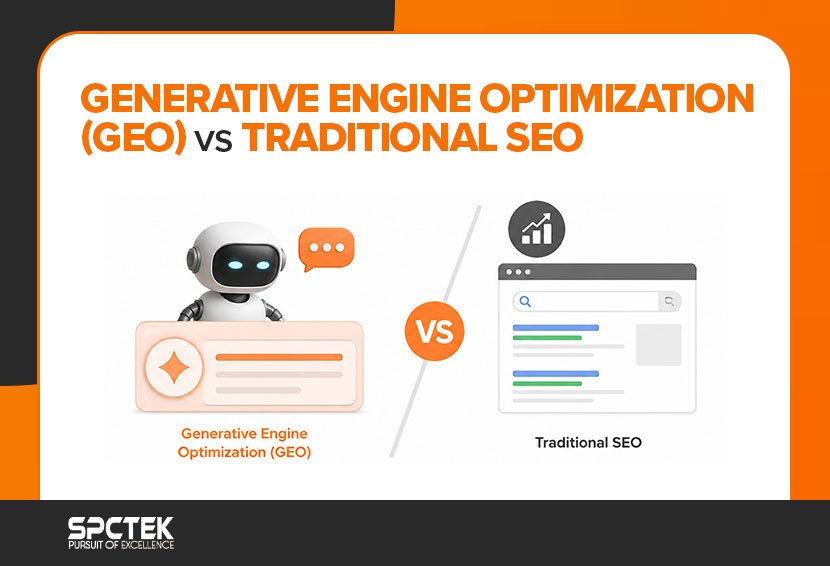
Traditional SEO gets you ranked on Google. Generative engine optimization gets you cited inside AI answers on ChatGPT, Perplexity, and Gemini. These are two different goals, two different strategies, and in 2026, you need both.
Most brands are still running a 2022 SEO playbook. This guide breaks down what generative engine optimization actually is, how it differs from traditional SEO, and what you need to do differently right now.
What Is Generative Engine Optimization (GEO)?
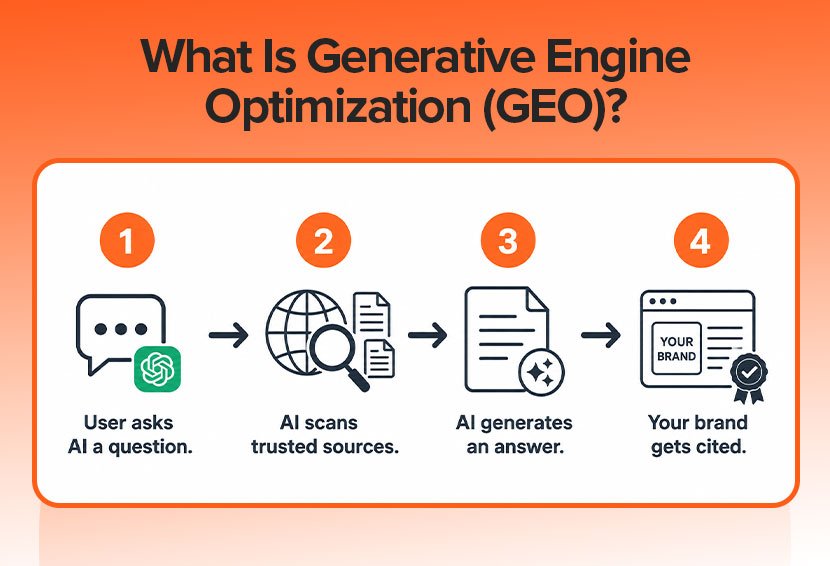
Generative engine optimization is the practice of optimizing your content so AI-powered search engines cite you when generating answers. The goal is a mention or citation inside an AI-generated response.
The platforms where this matters right now are ChatGPT, Claude, Perplexity, Google AI Overviews, Gemini, and Microsoft Copilot. When someone asks any of these questions, they pull from sources they consider authoritative. GEO is about making sure your content is one of those sources.
What Is Traditional SEO and How Does It Work?
Traditional SEO is the practice of optimizing your website to rank on Google and other search engines. You target keywords, build backlinks, fix technical issues, and earn clicks from people browsing results pages.
It still matters. Google handles over 13.68 billion searches per day compared to ChatGPT’s 2.5 billion. Anyone telling you SEO is dead right now is not looking at the numbers. But the gap is closing faster than most people realize, and the way people use search is changing underneath our feet.
Can You Explain the Differences Between AI Search Optimization and Traditional SEO?
The difference is simple. Traditional SEO rewards keywords, backlinks, and volume. AI search optimization rewards structure, authority, and clarity. SEO chases rankings and clicks while GEO chases citations inside AI answers. AI traffic is smaller in volume but converts at 4.4x the rate of organic visitors. And unlike SEO, publishing more content does not help your GEO visibility at all.
1. The goal is different
Traditional SEO chases rankings and clicks. Generative engine optimization chases citations and mentions inside AI answers. With GEO, you can have full visibility without a single user visiting your website. The AI answers the question and moves on.
2. What gets rewarded is different
SEO rewards keyword placement, backlinks, and technical performance. GEO rewards content that is clear, well-structured, fact-rich, and easy for AI to extract and attribute back to a source. Vague, padded content gets ignored by AI systems entirely.
3. The traffic quality gap
Traditional organic search drives 47%-53% of all website traffic globally. AI platforms drive roughly 0.15%. But here is what almost nobody writes about. AI search visitors convert at 4.4x the rate of traditional organic visitors. Less volume, much higher quality. The person who arrives from an AI citation has already had their basic question answered and is showing up to act.
4. How you measure results is different
SEO has Google Search Console, GA4, Ahrefs, and Semrush. GEO measurement barely exists yet. Most brands have no idea whether they show up in AI answers at all. You either track it manually by running prompts in ChatGPT and Perplexity yourself, or you use tools like Semrush AIO that are only just emerging. This is an honest reality most blogs skip over.
5. Content volume works against you in GEO
In traditional SEO, publishing more content generally helps. In generative engine optimization, it does not work that way. Ten well-structured, authoritative, cited pieces outperform 100 keyword-stuffed blog posts in AI visibility every single time. More content without structure and authority signals is invisible to AI systems.
Can GEO Replace Traditional SEO?
No. And any generative engine optimization expert telling you to drop SEO is giving you bad advice.
Google still runs more searches than ChatGPT. The foundation SEO builds, domain authority, backlinks, and indexed content, which still feeds directly into whether AI platforms trust and cite you in the first place. GEO needs SEO underneath it to work properly. Think of SEO as the foundation and GEO as the next floor you build on top.
Are Answer Engine Optimization (AEO) and Generative Engine Optimization (GEO) the Same?
People debate whether answer engine optimization and generative engine optimization are the same thing. Honestly, they are more or less the same idea with different names.
Both are about getting your content cited or surfaced inside AI-generated answers rather than traditional search results. The difference people try to draw, that AEO is for featured snippets and voice search while GEO is for large language models, is mostly a technicality. In practice, the content strategies, the structural requirements, and the optimization principles are identical.
Different agencies and researchers use different terms to describe the same shift in how search works. Do not get caught up in the label. Whether you call it AEO or GEO, the goal is the same. Write clear, structured, authoritative content that AI systems trust enough to cite.
Is Traditional SEO Dead in 2026?
No. But it is not enough on its own anymore.
Traditional search engine volume would drop 25% by 2026 as AI chatbots become substitute answer engines. That shift is already happening. And 58% of users have already replaced classic search with AI tools when researching products and services.
But organic search still drives nearly half of all global website traffic. Abandoning traditional SEO right now would be a serious mistake. The AI-driven strategies vs traditional SEO tactics debate is a false choice. SEO builds your visibility today. GEO secures your visibility tomorrow. You run both.
The Brand vs Category Trap Nobody Talks About
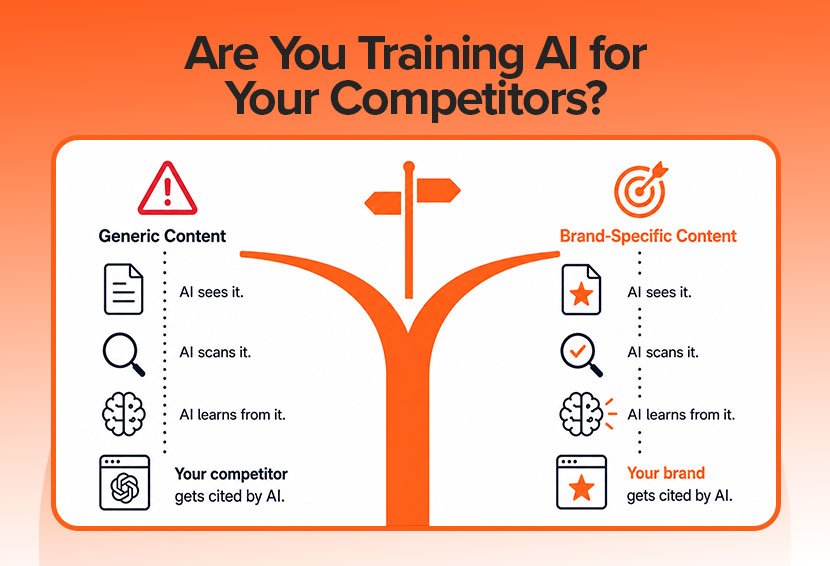
This is the generative engine optimization insight that nobody talks about. Your content can teach AI to understand your category without ever building recognition for your brand specifically. If you write generic educational content about your industry, AI models learn the subject well, but they associate authority with whoever has the strongest external citation signals. That might be your competitor.
Generic content that educates about a problem space without establishing distinct signals about your brand trains the model on your competitor’s territory as much as your own. To actually show up in AI answers for your brand, you need external citations pointing back to you, consistent entity signals across your website, LinkedIn, and Google Business Profile, and content tied to specific claims about your business.
For a full breakdown of GEO strategies that build brand AI visibility, go through our blog: How to Grow Your Brand’s AI Visibility With GEO Strategies?
What Are the Best Generative Engine Optimization Geo Best Practices for 2026?
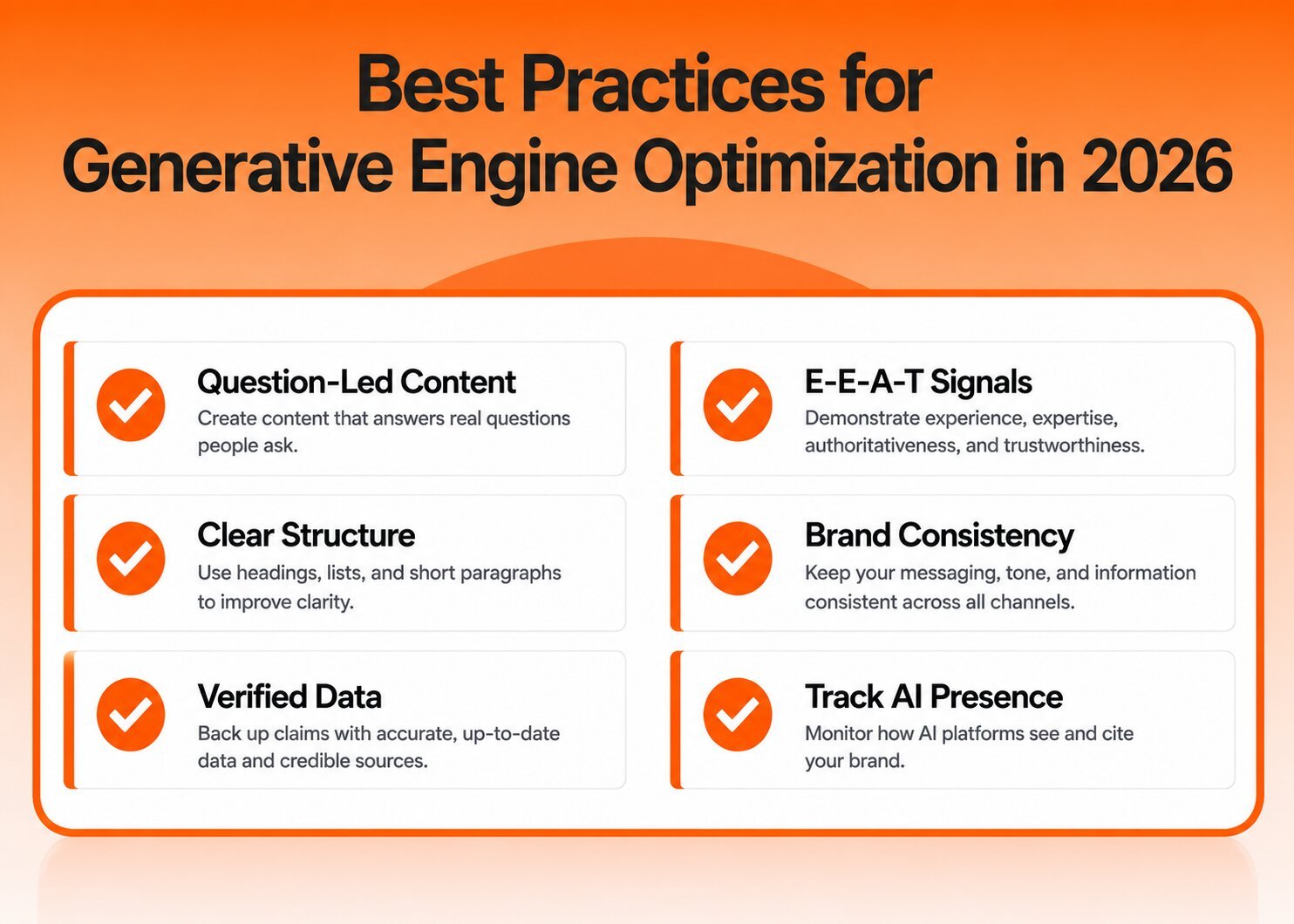
The best practices for 2026 GEO include writing around specific questions, keeping your structure clean, and backing every claim with a real source. Make sure your author credentials and brand details are consistent everywhere AI can find them, your website, LinkedIn, Google Business Profile, and any third-party mentions. Then, check monthly whether you actually show up in ChatGPT and Perplexity for your category.
- Question-led content: Write around specific questions, not broad topics. AI cites focused, question-based content far more often than general overview articles.
- Clear structure: Use headings, TL;DR summaries, and direct definitions. AI needs to pull your content fast. Long buried paragraphs get skipped.
- Verified data: Back every claim with a real source. AI platforms trust and reference content that cites its facts. Unsourced statements get ignored.
- E-E-A-T signals: Add real author bios, credentials, and original research. These carry more weight in GEO than they ever did in traditional SEO.
- Brand consistency: Keep your name, details, and messaging consistent across your website, LinkedIn, Google Business Profile, and any third-party mentions. AI builds its picture of your brand from all of these together.
- Track your AI presence: Run non-branded category prompts in ChatGPT and Perplexity every month. If you want structured tracking, Semrush AIO is the most developed option right now.
If you want help building a strategy that works for both traditional SEO and GEO, SPCTEK’s AI SEO services cover the full picture.
What Tools Are Available for Mid-Sized Businesses for Implementing Generative Engine Optimization?
GEO Tools track how brands and products are cited within conversational AI models like ChatGPT, Gemini, and Google AI Overviews. They provide mid-sized businesses with automated prompt tracking, competitor visibility analysis, and actionable content recommendations to capture AI search traffic.
- Semrush (AI Visibility Toolkit): A hybrid environment that tracks traditional search keywords side-by-side with conversational AI prompts. It works within existing workflows to monitor citations across ChatGPT, Google AI Overviews, Gemini, and Perplexity.
- Writesonic (GEO Engine): Built for rapid deployment and production speed. It features an automated “Action Center” that scans competitor visibility gaps and drafts concise, bot-ready text blocks to maximize AI citations.
- Peec.ai: A dedicated optimization tool that tracks prompt formulations, benchmarks brand citation frequency against competitors, and provides linguistic visibility data across major language models.
- Goodie AI: A lean tracking platform optimized for e-commerce and retail brands. It features a specialized module to help product listings surface accurately inside AI shopping results and agentic commerce engines.
- SEOTalos: A targeted monitoring tool built specifically to analyze Google AI Overviews. It isolates algorithm updates and lets teams run structured tests to see how content changes impact AI-driven search results.
- Otterly AI: An agile monitoring application that scans conversational engines to pinpoint where competitors are getting cited, highlighting exact content gaps you need to fill.
Also Read: Top Generative Engine Optimization Agencies in 2026
SEO vs GEO: Which Should You Prioritize?
Run both. Do not pick one. If you already have an established SEO foundation, spend roughly 70% of your effort maintaining and growing it, and 30% building out your GEO visibility. If you are starting from scratch, build every piece of content to be SEO-solid and GEO-ready at the same time. The structural requirements overlap more than most people think.
For small businesses specifically, this does not have to mean a huge budget. It means being smarter about the content you already produce.
If you are looking for expert help, SPCTEK’s AI Search Optimization service is designed to improve the AI share of voice for mid-sized businesses for higher traffic and conversions.