
Too busy to read? Listen to this article instead.
Your best TikTok post this month is probably still sitting there right now, getting likes and comments for free, while your ad budget goes toward something new that nobody has tested yet. TikTok Spark Ads flip that around. Instead of building a fresh ad from scratch, you put money behind the post that already proved it works, which is exactly why more brands are leaning on this format every quarter instead of treating it as a one-off experiment.
This guide covers what TikTok Spark Ads actually are, how they work under the hood, how they compare to a normal TikTok ad, and the exact steps to set one up.
What Are Spark Ads on TikTok?
A Spark Ad takes an existing organic TikTok post and runs it as a paid ad while leaving everything about it untouched. The video and caption stay the same. The account handle, the profile picture, the comments, the likes, and the share count all stay exactly as they were. The only thing that changes is a small “Sponsored” label added to the post, and a call-to-action button attached underneath it.
The post can come from your own brand account, or from a creator’s account if they give you permission to run their content as an ad. Either way, the post keeps its original identity. It doesn’t look like an ad because it isn’t a new piece of content built for an ad platform. It’s a real post that already existed in the feed, which is the core idea behind how TikTok Spark Ads work.
How Do Spark Ads Work on TikTok?
Getting a Spark Ad live starts with permission. If you’re using your own brand’s post, you generate the authorization code yourself inside TikTok Ads Manager. If you’re using a creator’s post, the creator needs to grant you a Spark Ads code, either through TikTok’s Creator Marketplace or directly from their account settings. That code is what lets you legally run someone else’s content as your ad.
Once you have the code, you plug it into a new campaign in Ads Manager, choose your objective, and set your targeting and budget the same way you would for any other ad.
Why Does a Spark Ad Perform Better Than a Regular Ad?
TikTok’s algorithm reads the engagement already sitting on that organic post, the likes, comments, shares, and watch time, as a signal about who wants to see it. A post that already has strong organic traction gives the algorithm a head start, so a TikTok Spark Ad built on that post gets matched to similar viewers faster than a brand-new ad starting from zero data. This matters even more now than it used to, since conversion tracking got noisier after Apple’s iOS 14 privacy changes, which means platforms lean harder on the engagement signals they can still see clearly. A Spark Ad walks into the auction with proof it already resonates. A cold ad has to earn that proof from scratch.
What Are the Types of TikTok Ads?
A TikTok Spark Ad is one format among several types of TikTok Ads, and knowing where it sits helps make sense of when to use it. Most brands run a mix of In-Feed Ads and Spark Ads together, using In-Feed for fresh creative tests and TikTok Spark Ads to scale whatever wins.
- In-Feed Ads: These are built fresh inside Ads Manager and run from the brand’s own ad account rather than a real post, so they carry no prior engagement history.
- Spark Ads: TikTok Spark Ads boost an existing organic post, keeping its real engagement and identity intact.
- TopView: It places an ad as the very first thing a user sees when they open the app.
- Brand Takeover: It is a full-screen ad that appears immediately on app open, usually reserved for larger brand campaigns.
- Branded Effects: It lets users interact with a custom filter or effect tied to a brand.
TikTok Spark Ads vs. Non-Spark Ads
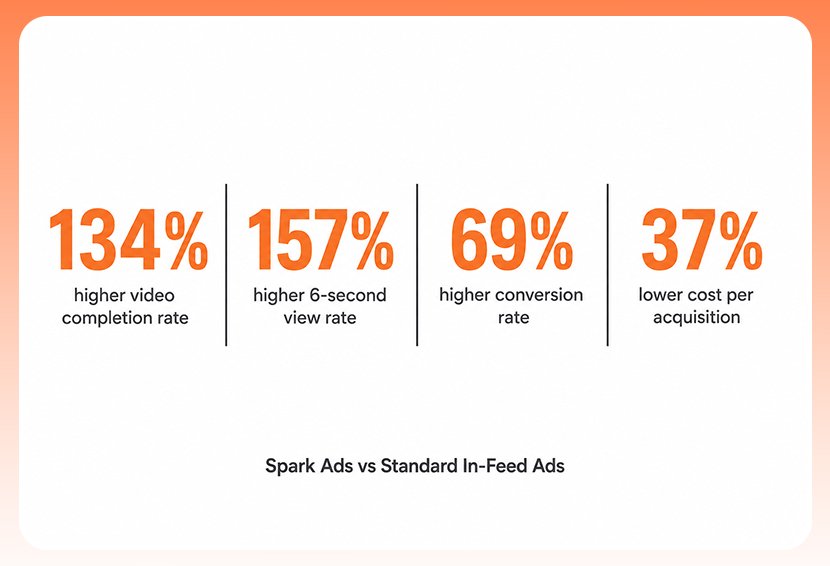
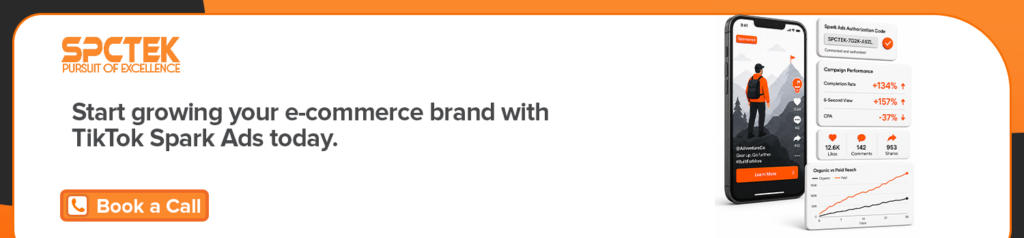
The clearest way to see the difference is side by side. The performance gap between the two is well documented. According to TikTok’s own reporting, Spark Ads see a 134% higher completion rate and a 157% higher 6-second view-through rate compared to standard in-feed ads. A newer landing page format tied to this format has also shown a 69% higher conversion rate and 37% lower cost per acquisition. Standard ads still have their place, especially for fast creative testing, but once something is working organically, TikTok Spark Ads are almost always the stronger move for scaling it.
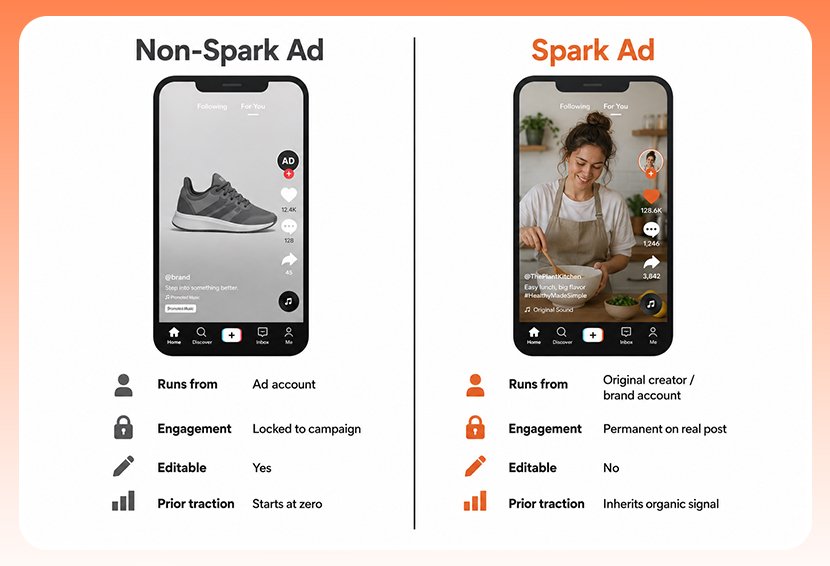
Here is the clear difference between TikTok Spark Ads vs. Non-Spark Ads:
Non-Spark Ads/Normal Ads
A standard, non-Spark ad is built directly inside Ads Manager. It runs from the brand’s ad account, not a real profile. Any engagement it earns, for example, likes, comments, and shares, stays locked inside that campaign and disappears once the campaign ends. You can edit it freely, swap the video, change the caption, and adjust the format, since it was never a real post to begin with.
TikTok Spark Ads
A TikTok Spark Ad runs from the original account, whether that’s the brand’s or a creator’s. The engagement it earns adds to the post’s real, permanent count, so the underlying post keeps growing even after the ad campaign stops. You cannot edit it. Whatever the original post looked like, that’s what runs, and there is no reformatting, no removing the music, no adding captions that weren’t already there.
What Are Some TikTok Spark Ads Examples?
TikTok Spark Ads examples tend to follow the same pattern. A creator posts something real, it earns steady engagement on its own, and the brand turns that exact post into an ad instead of writing something new from scratch.
L’Oréal
Sparked creator content across a product line launch and generated 161 million impressions off posts that started as ordinary creator uploads, not brand-produced ad creative. The scale came from the content already resonating before a single paid dollar sat behind it. You can watch the original post here.
Hourglass Cosmetics
Sparked a creator’s lip combo video, and the reason it worked says a lot about what makes a good Spark Ad in the first place. There’s no music, no editing tricks, just the creator talking straight to camera about finally finding the right combination and applying it live. You can watch the original post here. That stripped-down feel is exactly why it reads as a real post instead of an ad, and it’s the same reason creative strategies for ads keep pointing back to raw, unscripted content over polished production.
Nécessaire
They took a similar approach with a creator’s unscripted reaction to their deodorant, jokes about needing a bigger size included. You can watch the original post here. Nothing about the pacing or captions reads as brand-written, which is the whole point. A brand strategy that leans on creator voice instead of brand voice tends to earn the kind of trust a studio-shot ad rarely gets.
All the examples share the same throughline. Neither started life as an ad. Each one was a real post that already proved people wanted to watch it, and the brand simply put budget behind proof instead of a guess, which is the entire logic behind why organic and paid marketing works in that order and not the reverse.
How to Create a Spark Ad on TikTok
Creating TikTok Spark Ads follows a short, specific sequence. Get the Spark Ads code from a top-performing post, self-generated or from the creator. Launch a campaign using that code instead of new creative. Monitor performance and the live comment section throughout.
- Pick a post that’s already performing: Look for above-average watch time, comments, or shares compared to your other content.
- Get authorization: If it’s your own post, generate the code inside TikTok Ads Manager. If it’s a creator’s post, request a Spark Ads code from them through the Creator Marketplace or their account settings.
- Start a new campaign: in Ads Manager, choose an objective that matches your goal, traffic, conversions, or app installs.
- Enter the authorization code: when prompted, instead of uploading new creative.
- Targeting, budget, and schedule: Set your targeting, budget, and schedule the same way you would for any other campaign.
- Launch and monitor: Launch and monitor the post’s performance as an ad, keeping an eye on comments, since the comment section stays public and active the whole time it runs.
What Are the Best Practices for Running Spark Ads Like Top Brands?
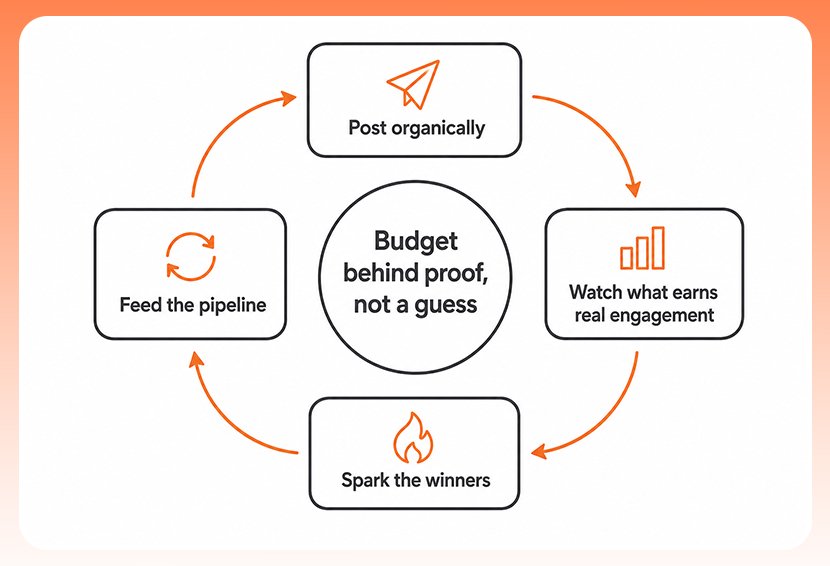
The brands getting the most out of TikTok aren’t treating TikTok Spark Ads as a one-time trick. They’re running it as a loop, and that loop is what separates consistent performance from a single lucky post.
- Post organically first: Nothing gets sparked until it’s already proven itself in the feed for free.
- Watch for what earns real engagement: Watch time, comments, and shares are the signal, not gut instinct about which post “feels” strong.
- Spark the winners: Budget goes behind proof, not a guess about what might work next.
- Keep the cycle going: Each round makes the next campaign a little more predictable, since the brand is working with content that already has data behind it instead of starting from zero again.
- Feed the pipeline deliberately: The creator content driving these campaigns is the same content covered in UGC versus professional creators, since a Spark Ads strategy is only as strong as the organic pipeline feeding it. Knowing which type of content actually earns organic traction in the first place is what decides whether there’s anything worth sparking at all.
- Treat it as non-optional for TikTok Shop: For sellers running TikTok Shop, this loop is baked into how the platform works now. As of July 2025, GMV Max became the default and only supported campaign type for TikTok Shop sales campaigns, which means Spark Ads now sit inside a broader commerce system rather than working as a standalone brand-awareness tool on the side.
What Is TikTok Ads Minimum Daily Budget in 2026?
Before any of this goes live, TikTok enforces a budget floor. As of 2026, the TikTok ads minimum daily budget is $50 at the campaign level and $20 at the ad group level, with a $500 minimum total campaign budget. These are hard floors. A campaign set below them either won’t launch or won’t get consistent delivery, and this applies to Spark Ads campaigns the same way it applies to any other format.
Meeting the minimum keeps a campaign technically running, but it doesn’t guarantee it learns fast enough to optimize well. Running fewer, better-funded ad groups tends to work better than spreading a small budget across several thin ones, since each ad group needs enough spend to gather real performance data before the algorithm can optimize it properly.
Conclusion
The best TikTok ad a brand runs this month might already be posted, sitting quietly in the feed, earning comments nobody’s paying attention to yet. TikTok Spark Ads exist to catch that moment and put real budget behind proof instead of a guess.
Getting the mix right, knowing which posts deserve to be sparked, running the influencer and UGC content that actually earns that organic traction in the first place, and structuring the budget so the algorithm has enough room to optimize is where most brands either win or waste money. If building that system feels like more than your team has time for, that’s exactly the kind of work TikTok Ads management is built to handle.