
What Is Amazon PPC?
Amazon PPC (Pay-Per-Click) is an advertising system where sellers pay only when a shopper clicks their ad. It allows brands to promote products directly in Amazon search results and on product pages, helping increase visibility, drive targeted traffic, and generate more sales.
What Are the Different Types of Amazon Ads?
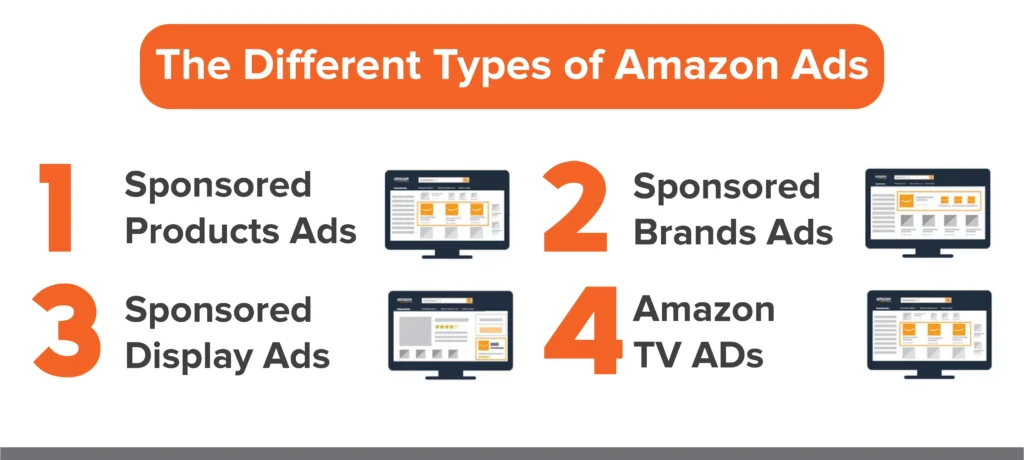
1. Sponsored Products Ads: Sponsored Products Ads act like targeted spotlights, grabbing attention in search results, product pages, and relevant areas. Users searching for specific keywords, browsing categories, or even checking out competitors can discover your offerings. You only pay when someone clicks, making it a cost-effective way to reach interested buyers.
2. Sponsored Brands Ads: Think of Sponsored Brands Ads as mini-billboards within search results. Showcase your brand logo/Brand Video, promote up to three products, boosting brand awareness and driving traffic to your listings. Target by keywords, categories, or specific products to ensure your message reaches the right audience.
3. Sponsored Display Ads: Sponsored Display Ads appear on third-party websites, apps, and social media where potential customers interested in similar products visit. This also involves retargeting past visitors, attracting new ones, and promoting specific deals or products. With the help of Sponsored Display Ads, you can laser focus your outreach by targeting based on demographics, interests, and even purchase behavior.
By understanding these core ad types and their distinct advantages, you can choose the ones that best align with your business goals, target audience, and budget.
4. Amazon TV Ads: Amazon TV Ads, also known as Sponsored TV, is a new advertising option within Amazon PPC that allows businesses of all sizes to run video ads on popular streaming services like Amazon Prime Video and Fire TV, reaching a wider audience beyond Amazon’s website. This program offers benefits like increased brand awareness, measurable results, and accessibility, making it a valuable tool for expanding your reach and driving results through video advertising on streaming platforms.
Also Read: Amazon Ad Types and Their Benefits: A Complete Guide
What Are the Benefits of Amazon PPC?
Selling on Amazon is a competitive race, and standing out amidst millions of products requires effective strategies. Here’s where Amazon PPC benefits truly shine:
1. Attract the Right Customers
- Laser-Targeted Reach: Unlike organic search, where visibility relies on algorithms, PPC allows you to target specific keywords shoppers actually use. Imagine your product appearing right when someone searches for a similar item! This targeted approach delivers highly relevant traffic, increasing the likelihood of conversions.
- Bypass Organic Ranking Barriers: New products often struggle to climb the organic ranking ladder. PPC offers an immediate solution, placing your product in front of relevant eyes
2. Boost Sales and Conversions
- Prime Placement, Elevated Clicks: Secure prominent ad placements on search results pages and product detail pages, grabbing attention and driving valuable clicks. Remember, clicks often translate to increased sales and conversions, propelling your brand forward.
- Data-Driven Optimization: PPC provides valuable insights into what resonates with your target audience. Analyze keyword performance, refine bids, and optimize ad copy to continuously improve conversion rates, maximizing your return on investment (ROI).
Also Read: 6 Reasons Why Outsourcing Amazon PPC is Beneficial for Your Business
3. Enhance Brand Recognition and Awareness
- Repeated Exposure, Growing Familiarity: Even if customers don’t click immediately, repeated ad exposure builds brand awareness and recognition. Over time, they’ll remember your brand and consider you when making purchase decisions.
- A/B Testing: Test different ad formats, visuals, and messaging to discover what resonates with your audience. This creative freedom helps you refine your brand voice and establish a strong presence on the platform.
Remember, Amazon PPC benefits are not magic beans; they require strategic planning, ongoing optimization, and continuous learning. By leveraging these benefits effectively, you can transform your Amazon presence, attract the right customers, and watch your brand flourish.
What Is Amazon PPC Campaign and Ads Optimization?
Amazon PPC campaign and ads optimization is the ongoing process of improving your sponsored ads to increase sales while lowering wasted ad spend. The goal is to show your ads to the right shoppers at the right time, convert more clicks into purchases, and maximize profitability.
Amazon PPC campaign and ads optimization involves:
- Selecting high-intent keywords
- Optimizing product listings
- Adjusting bids and budgets
- Adding negative keywords
- Refining targeting
- Analyzing performance metrics like ACoS and ROAS
What Are the Best Strategies to Optimize Amazon PPC Campaigns for Better ROI?
Optimization of Amazon PPC campaigns and Ads requires focusing on buyer intent, listing quality, and continuous data-driven optimization. Strong results come from targeting high-intent keywords, aligning ads with well-optimized product listings, controlling wasted spend through negative keywords, and scaling campaigns that consistently generate profitable sales.
1. Focus on High-Intent Keywords
Not all keywords drive purchases on Amazon. Long-tail, high-intent keywords usually convert better because they reflect strong buying intent. Instead of broad terms like “running shoes,” target search terms such as “buy red running shoes size 10.” These shoppers already know what they want and are closer to making a purchase.
2. Optimize Product Detail Pages
On Amazon, your product listing is the landing page. It must fully support the ad promise. Optimize titles, bullet points, images, A+ content, pricing, and reviews so they clearly communicate value and remove buying friction. A well-optimized listing improves conversion rate and directly increases PPC ROI.
3. Write Clear and Compelling Ad Copy
Amazon ad copy should highlight key benefits, differentiators, and use cases. Focus on what solves the shopper’s problem, not just product features. Clear messaging in titles and bullets helps shoppers quickly understand why your product is the right choice.
4. Use Negative Keywords
Negative keywords are essential for controlling wasted spend. Regularly review search term reports and block irrelevant or low-intent searches such as “free,” “used,” or unrelated product types. This ensures your budget is spent only on traffic that has a real chance of converting.
5. Refine Targeting Strategies
Use a mix of automatic, manual keyword, and product targeting campaigns. Auto campaigns help discover new search terms, while manual campaigns give control over bids and match types. Product targeting allows you to appear on competitor listings or complementary products, capturing shoppers at the point of comparison.
6. Continuous Monitoring and Improvement
- Monitor Performance Regularly: Monitor and track PPC campaign metrics consistently. Look for trends in spend, sales, ACoS, and conversion rate rather than reacting to single-day changes.
- Pause or Fix Underperforming Elements: If keywords, product targets, or campaigns fail to meet performance goals after optimization, pause them. This protects your budget and improves overall account efficiency.
- Scale What Works: Once you identify keywords, targets, or campaigns that consistently deliver profitable sales, increase budgets or bids gradually. Scaling proven winners is the safest way to grow Amazon PPC ROI.
Advanced Optimization Tactics
Amazon PPC performance improves when you focus on profitability metrics like conversions, ACoS, and ROAS, rather than just clicks. Use Amazon’s dynamic bidding carefully to control costs, continuously test and refine keywords, bids, and targeting, and optimize Amazon campaigns by analyzing placement and search term performance to invest more in what delivers the best ROI.
1. Track the Right Performance Metrics: Amazon PPC optimization depends on metrics such as conversions, ACoS, ROAS, click-through rate, and total sales impact. Focus on profitability rather than clicks alone, especially for mature products.
2. Use Amazon’s Dynamic Bidding Carefully: Dynamic Amazon bidding can increase or decrease bids based on conversion likelihood. Use it selectively and monitor performance closely, especially on high-spend campaigns, to avoid overspending.
3. Continuously Test and Refine: Test different keyword match types, bids, product targets, and campaign structures. Even small adjustments can improve efficiency over time. Make changes gradually so results are clear and measurable.
4. Optimize by Placement and Search Term Performance: Review placement reports to see how ads perform in top-of-search, product pages, and rest-of-search placements. Increase bids on placements that deliver strong ROI and reduce spend where performance is weak.
What Are The Common Mistakes To Avoid On Amazon PPC?
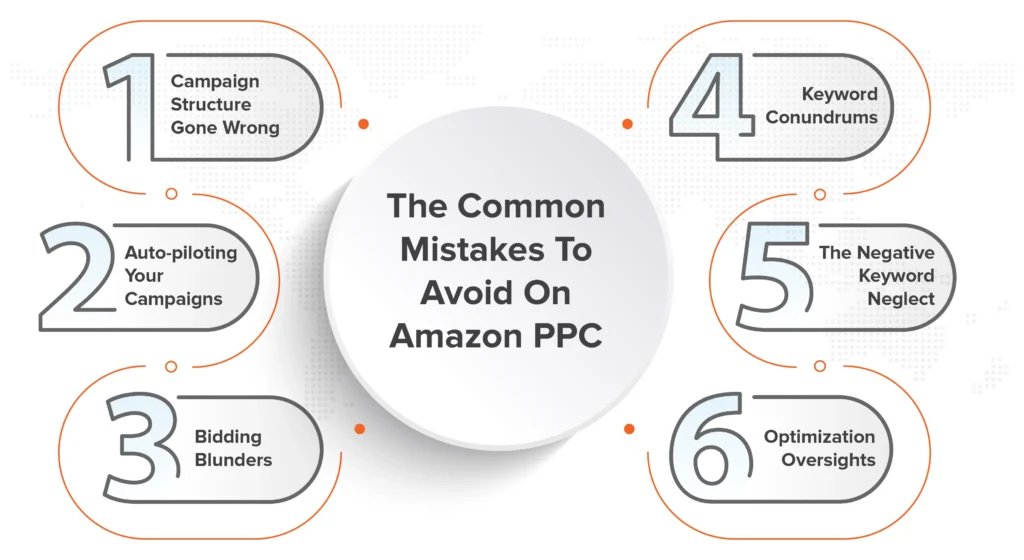
Amazon PPC holds immense potential for boosting your product visibility and driving sales. However, navigating this advertising platform successfully requires avoiding some common pitfalls. By steering clear of these Amazon PPC mistakes, you can ensure your campaigns run smoothly and deliver optimal results.
1. Campaign Structure Gone Wrong
Imagine throwing all your ingredients into a single pot without organization. It might cook something, but it won’t be the delicious dish you had envisioned. The same applies to Amazon PPC campaigns. Don’t lump all your products together. Instead, structure your campaigns strategically by product type, brand, or specific goals (e.g., new product launch, seasonal promotion). This allows for fine-tuned optimization and efficient budget allocation, maximizing the impact of your Amazon PPC campaigns.
2. Auto-piloting Your Campaigns
While auto-campaigns offer a convenient starting point, relying solely on them is like setting your cruise control and hoping for the best. Remember, the road to PPC success involves active management. Combine auto-campaigns with manual campaigns to gain granular control. This allows you to fine-tune bids for valuable keywords, experiment with different targeting strategies, and ultimately squeeze the most juice out of your Amazon PPC efforts.
3. Bidding Blunders
Imagine bidding the same price for a vintage designer bag as for a pair of socks. Unrealistic, right? The same applies to Amazon PPC bidding. A one-size-fits-all approach ignores crucial factors like product profitability, conversion rate, and competition. Tailor your bids for each product, considering its unique characteristics and market dynamics. This ensures you’re not overpaying for clicks or leaving valuable opportunities untapped. Remember, smart bidding is key to Amazon PPC success.
4. Picking the Perfect Keywords
Keywords are the foundation of any successful Amazon PPC campaign. Guessing which terms your target audience searches for is like playing darts blindfolded. Instead, invest in proper keyword research. Utilize specialized tools to identify relevant, high-traffic keywords.
5. Neglecting Negative Keywords
Think of negative keywords as bouncers at your exclusive club, preventing irrelevant searches from draining your budget. Ignoring negative keywords is like leaving the door wide open, welcoming anyone regardless of their purchase intent. Utilize broad, phrase, and exact match variations to have complete control over which searches trigger your ads. Effectively utilizing negative keywords ensures your Amazon PPC campaigns target the right audience, maximizing your advertising impact.
6. Optimization Oversights
Launching a campaign and forgetting about it is like planting a seed and expecting a magical harvest without tending to it. Amazon PPC requires continuous optimization. Regularly monitor campaign performance, analyzing key metrics like impressions, clicks, conversion rate, ACoS (advertising cost of sale), and ROI (return on investment). Based on these insights, adjust bids, add negatives, and test new keywords to keep your campaigns performing at their peak. Remember, constant optimization is the fuel that propels your Amazon PPC success.
Also Read: Top Mistakes to Avoid in Your Amazon PPC Campaigns
Conclusion
In conclusion, it would be appropriate to state that efficient management of PPC campaigns on Amazon for SMBs is a critical issue. However, with the right selection of keywords and their combination, avoiding bidding blunders, and exclusion of negative search terms can increase your overall ROAS. Hence, it is important to follow these instructions to extract maximum returns on your campaign.