
OpenAI has confirmed that it is testing advertising inside ChatGPT. Until now, ChatGPT relied mainly on subscriptions and enterprise partnerships. With this change, ads in ChatGPT introduce a new monetization layer that brings the platform closer to search and social media platforms while still trying to protect user trust.
This development matters far beyond OpenAI itself. It affects how people discover products, how brands think about visibility, and how marketing may evolve in an AI-first environment. As OpenAI begins testing ads in ChatGPT, marketers and businesses need to understand the context, mechanics, and strategic implications early.
This article explains why OpenAI is introducing ads, how they will work, what will not change, and what marketers should do to prepare for ChatGPT advertising.
Will ChatGPT Have Ads?
Yes, ChatGPT will have ads, but in a limited and controlled way. OpenAI has confirmed that it is testing ads for users on the Free and Go plans. These ads appear after ChatGPT’s responses and are clearly labeled as sponsored content. They do not influence how answers are generated, and paid plans such as Plus, Team, and Enterprise remain ad-free. The rollout is gradual, with OpenAI testing the experience carefully to avoid disrupting user trust.
Why OpenAI Is Introducing Ads?
OpenAI is introducing ads to help cover the high cost of running AI at scale while keeping ChatGPT accessible for free users. Ads also support long-term growth as AI becomes a major discovery platform.
1. The Cost of Running AI
Running advanced AI models is expensive. Training large language models requires massive resources, and serving millions of users every day adds ongoing infrastructure costs. While subscriptions compensate for these expenses, they are not enough to sustain long-term revenue growth alone.
Advertising offers OpenAI a scalable revenue stream that does not rely exclusively on paid users. This is the same logic that shaped the evolution of search engines and social platforms in earlier internet cycles.
2. Keeping ChatGPT Accessible
OpenAI has repeatedly emphasized that broad access to AI matters. Removing the free tier would limit adoption, especially for students, educators, small businesses, and users in developing regions.
By introducing ads on ChatGPT, OpenAI can keep the free experience available while offering paid plans as a premium, ad-free option.
OpenAI CEO Sam Altman addressed this directly, stating:
‘It is clear to us that a lot of people want to use a lot of AI and don’t want to pay, so we are hopeful a business model like this can work.’
3. Preparing for the Future of AI Search
AI-driven discovery is becoming competitive. Tech giants and startups alike are racing to define what comes after traditional search engines. ChatGPT is no longer just a productivity assistant. It is increasingly a place where users explore solutions, compare options, and make decisions.
Testing advertising now allows OpenAI to shape its own rules before external pressures force faster or less thoughtful monetization.
Who Will See Ads in ChatGPT?
Ads will only be shown to users on the Free and Go plans during the testing phase. Users on Plus, Team, and Enterprise plans will not see ads.
1. Free and Go Tier Users
Ads in ChatGPT will initially appear only for users on the Free and Go plans. Paid tiers such as Plus, Team, and Enterprise will remain ad-free.
This creates a clear value exchange. Users can either pay for an uninterrupted experience or continue using ChatGPT for free with limited advertising.
2. A Controlled Testing Phase
OpenAI is rolling this out gradually. Ads will be shown to a small percentage of users, primarily in the United States, during the early testing phase.
This cautious approach allows OpenAI to evaluate user response, advertiser demand, and potential impact on trust before expanding further.
How Ads Will Work Inside ChatGPT?
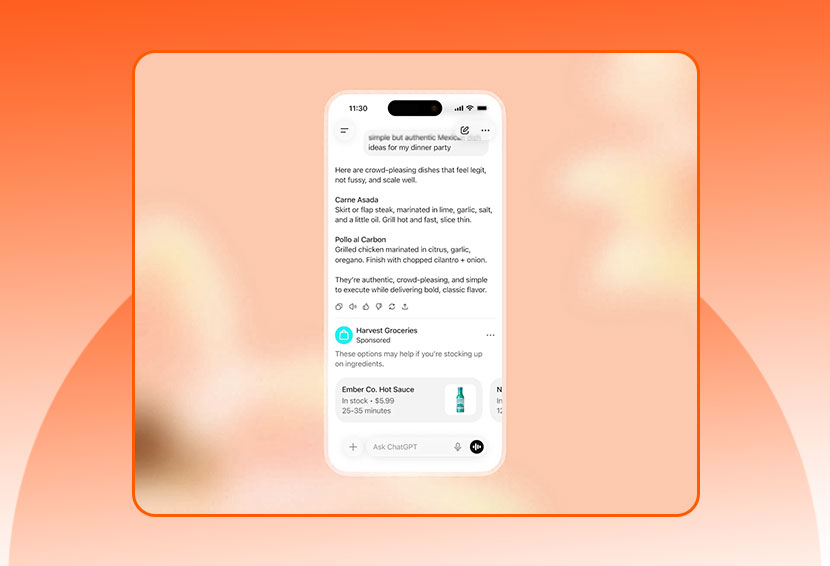
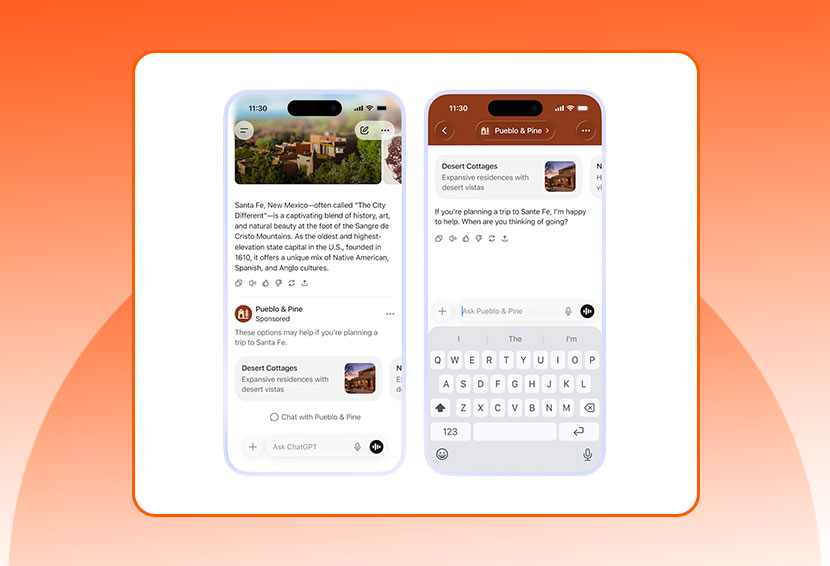
Ads appear after ChatGPT’s responses, are clearly marked as sponsored, and do not affect how answers are generated. They are designed to be helpful suggestions, not interruptions.
1. Placement After the Answer
Ads will not interrupt conversations or influence how ChatGPT responds. Instead, they will appear after the AI-generated answer, clearly separated from the main content.
This means a ChatGPT ad functions more like a suggested next step than a traditional interruption.
2. Clear and Explicit Labeling
All ads will be clearly marked as sponsored. Users will always be able to distinguish between ChatGPT’s response and paid content.
This principle is foundational. Advertisers cannot buy their way into ChatGPT’s reasoning or recommendations.
3. No Ads in Sensitive Contexts
OpenAI has confirmed that ads will not appear in sensitive areas such as health, politics, religion, or mental health. This is a major difference from traditional search engines, where ads often appear even for high-risk queries.
By limiting ads in ChatGPT in these contexts, OpenAI aims to preserve user safety and trust.
4. Privacy-First Targeting
Ads will not be based on long-term personal profiles or cross-session tracking. Instead, relevance will be primarily contextual, based on the current query.
For example, a user asking about e-commerce analytics may see a relevant tool mentioned after the response, but not because of prior behavior or identity tracking.
What Will Not Change?
ChatGPT’s answers will not be influenced by advertisers, and paid users will continue to have an ad-free experience. There will be no pop-ups or disruptive ad formats.
1. Answers Will not Be Affected: This is the most important distinction. OpenAI says that ChatGPT ads will not influence how questions are answered. The AI’s response is generated independently of advertising material. Ads exist outside the answer, not within it.
2. Paid Users Stay Ad-Free: Subscribers on paid plans will continue to enjoy an uninterrupted experience. This reinforces subscriptions as a premium offering and protects existing users from unexpected changes.
3. No Disruptive Formats: There will be no pop-ups, autoplay media, or mid-conversation interruptions. Ads are designed to be additive, not disruptive.
How ChatGPT Ads Change Discovery and Marketing?
Traditional search presents links. ChatGPT provides answers, then offers optional actions. This changes how advertising works. Visibility alone is no longer enough. Relevance, timing, and usefulness matter more. A ChatGPT ad campaign must align with user intent rather than compete for attention.
ChatGPT users ask specific, problem-focused questions. This results in fewer ad impressions but stronger intent. For marketers, this means quality traffic over quantity.
How Marketers Should Prepare for ChatGPT Ads?
Marketers should focus on AI visibility, strong educational content, and context-driven messaging. ChatGPT advertising rewards relevance and usefulness over aggressive promotion.
1. Focus on AI Visibility, Not Just Ads
Before investing in ChatGPT advertising, brands should understand how they appear in AI-generated explanations. If your category or solution is poorly represented in AI responses, ads alone will not fix that gap.
2. Strengthen Educational Content
AI systems rely on clear, authoritative content to understand brands and products.
Marketers should invest in:
- Clear product explanations
- Strong use-case content
- Consistent terminology across platforms
This foundation supports both organic AI understanding and paid placements.
3. Prepare for Contextual Messaging
Because ads on ChatGPT are context-driven, messaging must feel helpful rather than promotional. Effective ads will solve a problem, match the user’s language, and offer a logical next step. So, a well-placed ChatGPT ad should feel like guidance, not persuasion.
4. Rethink Keyword Strategy
ChatGPT users ask full questions, not short keywords.
Marketers should shift toward:
- Problem-based phrasing
- Conversational language
- Educational framing
This applies to both ad copy and landing pages.
5. Optimize Landing Pages for Informed Users
ChatGPT traffic arrives with context. Users already understand the problem.
Landing pages should:
- Get to the point quickly
- Reinforce clarity and trust
- Avoid unnecessary hype
Think of a ChatGPT ad campaign as mid- to bottom-funnel, not awareness-driven.
Potential Challenges of ChatGPT Advertising
Brands face risks around trust, placement, measurement, and regulation. Careless or misleading ads can quickly harm credibility in a trust-based AI environment.
1. Trust Must Be Preserved: If advertising expands too aggressively, user trust could erode. OpenAI’s slow rollout suggests strong awareness of this risk. Brands should also avoid over-promotion in a trust-based environment.
2. Tracking and Analytics Will Evolve: Attribution in conversational AI is complex. Traditional metrics may not fully capture impact. Early adopters should expect experimentation and learning.
3. New Rules and Regulations: Advertising in AI tools like ChatGPT will receive close attention from regulators, and brands will also be held responsible for how their ads appear. If an ad is not clearly labeled or appears in the wrong context, it can make a brand look careless or insensitive. As rules around AI advertising develop, brands will be expected to be honest, transparent, and cautious.
Final Thoughts
Ads in ChatGPT represent the early stages of AI-native advertising. The rules are different, the expectations are higher, and the margin for error is smaller.
For marketers, this is not about copying Google or Meta Ads strategies. It is about understanding intent, respecting context, and delivering real value.
Those who adapt early will shape how this channel evolves. Those who wait may find themselves trying to catch up in a discovery ecosystem that has already moved on.