
More than 50 million products are listed on Walmart Marketplace (walmart.com). With such a massive quantity of items, there is intense competition for SMBs to capture sales and revenue volume. To counter such hefty competition, the question arises: how to advertise on Walmart for greater visibility?
First, we need to know how important it is to come up with a good Walmart advertising plan. A strategy for Walmart advertising needs to be in line with goals, target groups, and an evaluation of the brand or product being advertised.
How Does Walmart’s Digital Advertising Platform Work?
Walmart Connect is Walmart’s digital advertising ecosystem, designed to help brands reach shoppers using powerful first-party retail data. It functions as a full-scale retail media network, combining precision targeting with measurable performance. The platform primarily uses a pay-per-click (PPC) model for sponsored search ads and a cost-per-thousand impressions (CPM) model for display advertising, all powered by an auction-based system to secure premium placements across Walmart’s digital and physical channels.
Ad Types and Placements
Walmart digital advertising offers the following types of ads:
1. Sponsored Products:
These ads appear within search results, category pages, and product detail pages such as in-grid listings and carousels. They are designed to drive immediate conversions by increasing product visibility.
2. Sponsored Brands and Videos:
Premium placements at the top of search results featuring brand logos, custom headlines, and multiple products. Video formats further enhance engagement and brand recall.
3. Onsite Display Ads:
Banner ads placed across Walmart’s website and app to capture attention during browsing and reinforce brand messaging.
4. Offsite Media:
Extends Walmart’s audience targeting beyond its own platform, allowing brands to reach shoppers across external websites and digital channels using Walmart’s shopper data.
5. In-Store Advertising:
Digital screens and audio ads inside Walmart stores connect online and offline shopping and influence purchase decisions at the point of sale.
Targeting and Bidding
- Automatic Campaigns:
Walmart’s algorithms handle targeting and placement, making it easier to discover relevant keywords and audiences with minimal manual effort. - Manual Campaigns:
Advertisers select specific keywords and set bids, allowing for precise targeting and greater control over performance. - Auction-Based System:
Walmart Connect uses a second-price auction model. Advertisers compete for placements, and the winner typically pays slightly more than the second-highest bid, which helps maintain cost efficiency.
Measurement and Insights
- Closed-Loop Attribution: A key strength of Walmart Connect is its ability to track the full customer journey from ad exposure to final purchase, whether online or in-store.
- Performance Analytics: Advertisers can access detailed reporting to measure impressions, clicks, conversions, and return on ad spend (ROAS), enabling continuous optimization.
Also Read: How to Advertise Your Products on Walmart Effectively?
Steps to Start Walmart Advertising
Here is a simple step-by-step guide you can follow to start advertising on the Walmart marketplace.
1. Become a Seller on Walmart Marketplace
If you don’t already have a seller account on Walmart, you should begin by creating one. It is a fairly simple process. The application filing takes 15 to 20 minutes. Walmart requires details about your business and any prior experience with online selling.
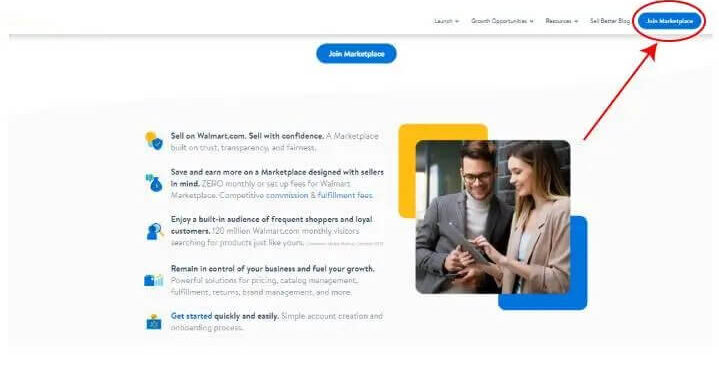
Source: Walmart Marketplace
Once your application is approved, you can continue with the Walmart registration process, including signing Walmart’s retailer agreement
Read More: Key Statistics about Walmart Marketplace in 2026
2. List your product
Once you complete your Walmart business profile, you can start listing your products. You can pick from the following two options.
- Set up by Match: This option suits you if you sell the products already listed on Walmart by SKU.
- Full Item Spec: This option is for you if you want to create a unique and customized listing for your products.

3. Request access to Walmart advertising
Once you are live and selling at Walmart, you need to write an application to Walmart Media Group. You would also need to provide the following details:
- Company name
- Contact information
- Number of SKUs
- Category
- Campaign Objective
- Target audience
- Advertising plan
- Expected budget
Walmart Media Group would assess your performance at Walmart and decide whether to approve your application. The parameters for performance assessment are not known, other than the requirement of a minimum monthly budget of at least $1,000.
4. Attend the Webinar by Walmart
If your application meets Walmart Media Group’s requirements, you will be invited to a Walmart advertising training session. The webinar is mandatory, and you must attend it to proceed with the rest of the process.
There will be a live, interactive question-and-answer session with Walmart Media Group representatives as part of the training webinar.
Walmart Media Group hosts these training sessions every week. So, managing to attend one of these sessions is relatively easy.
5. Log in to Walmart’s Ad Center
Once you are done with the webinar, Walmart Media Group will give you access to the Walmart ad center. You can get into your ad account using your seller account details.
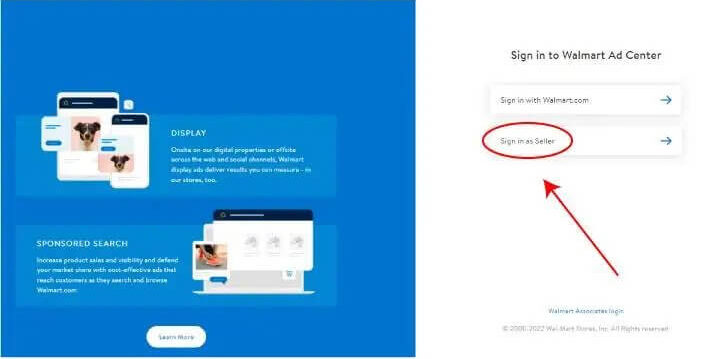
Source: Walmart ad center
If you have actively attended the training webinar, you will know how to start creating ads. Things would be simple if you had worked with Walmart Media Group or any other Walmart account management service provider to manage your Walmart advertising.
If you get stuck at some point, you can get in touch with your dedicated category specialist. Walmart Media Group assigns you a specialist when it approves your applications.
6. Launch Your First Campaign
You can launch your ad campaign once you have created your ads and come up with a plan, including:
- What products to advertise?
- How much to spend per month?
- How much to spend per product?
- How long do you want your ad campaign to run?
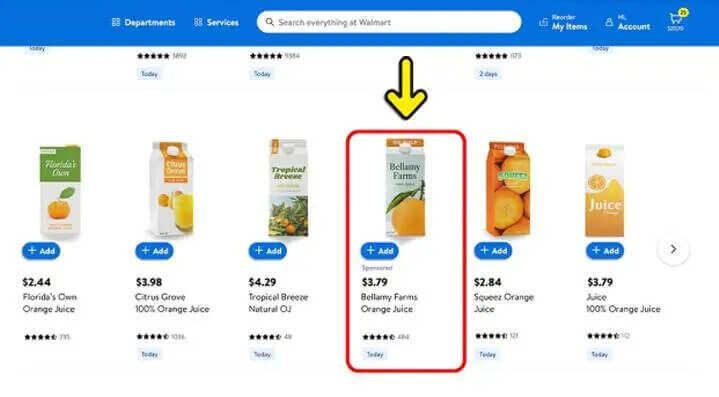
Once your ads are live, you should keep a watchful eye on your ad’s performance. It would allow you to monitor how helpful the ads are in increasing your sales volume or whether you need to make any changes to your Walmart advertising campaign.
How Can Brands Optimize Their Sponsored Products on Walmart?
Optimizing Walmart advertising, specifically Sponsored Products, requires a balanced approach that combines strong product listings, smart bidding strategies, and data-driven decision-making. Sellers can significantly improve performance by refining SEO, maintaining competitive pricing, and ensuring consistent inventory availability. Using both automatic and manual campaign structures also helps maximize return on ad spend (ROAS).
- Enhance Listing Quality: Well-optimized, keyword-rich listings are the foundation of successful Walmart advertising. Use relevant search terms, high-resolution images, and accurate product attributes like size, color, and material to improve visibility and conversions.
- Use Smart Bidding Strategies: Take advantage of Walmart’s automated bidding options, such as dynamic bidding (which adjusts bids based on conversion likelihood) and target ROAS (which focuses on profitability). These tools help control ad spend while improving efficiency.
- Monitor Keyword Performance: Regularly review Item Keyword Performance Reports to identify top-performing keywords. Increase bids on high-converting terms, and reduce or pause keywords with high ACoS and low returns.
- Stay Price Competitive: Walmart’s “Everyday Low Price” model plays a critical role in ad success. Competitive pricing improves Buy Box win rates, which directly impacts the effectiveness of your Sponsored Products campaigns.
- Maintain Stock Availability: Keeping products in stock is essential for Walmart advertising success. Out-of-stock items waste ad spend and hurt campaign performance, so ensure inventory is consistently available for fast shipping.
- Leverage Automation Tools: Use tools that categorize keywords based on performance, such as “no sales,” “high ACoS,” and “low ACoS”, to streamline optimization and improve efficiency.
- Structure Campaigns Strategically: Combine automatic campaigns for keyword discovery with manual campaigns focused on proven, high-performing keywords. This hybrid approach strengthens targeting and boosts overall ROAS.
This refined strategy ensures your Walmart advertising efforts are both scalable and profitable while maintaining strong visibility in a competitive marketplace.
Leveraging Walmart Advertising Agency For Profitable Ad Campaigns
Outsourcing Walmart Ads management can be a smart move for your business. It frees up your time and resources, allowing you to focus on other critical areas to scale effectively. Additionally, professional Walmart account managers bring valuable insights about how to advertise on Walmart that help you achieve your Walmart advertising goals. Overall, it’s a strategic option worth considering for growth and efficiency.
Wrapping Up
Advertising your products is one of the best ways to scale your Walmart business. It allows you to tap the marketplace much more effectively.
However, the only downside to Walmart advertising is its strict policies. These policies filter out uncommitted sellers from serious sellers, thus allowing them to advertise their products against head-to-head competition. If you are looking to advertise your products on Walmart, SPCTEK’s data-backed Walmart Ads Management service makes every dollar of your ad spend count with maximum ROI.